
I. SUMMARY OF EVENTS
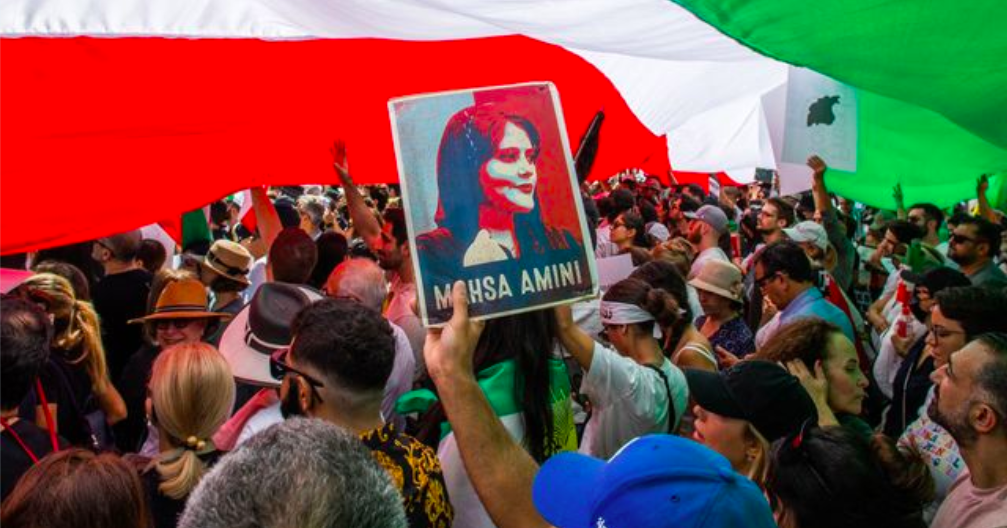
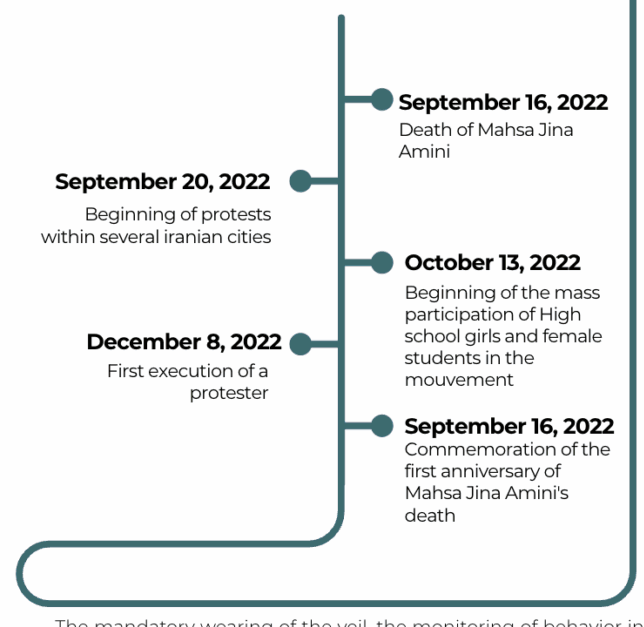
On September 16, 2022, Mahsa Jina Amini, a 22-year-old Iranian Kurdish woman, died in Tehran after being arrested by the morality police for "wearing inappropriate clothing." According to several witnesses and NGOs, she was beaten at the police station and succumbed to her injuries. Iranian authorities denied any responsibility, citing a "heart attack." Her death marked a tipping point for anger that had been building for years. The next day, in her hometown of Saqqez in the Kurdish region, women publicly removed their headscarves, an illegal and symbolically powerful act. Within days, protests spread to other Kurdish cities and then across the entire country, even to the most remote villages. This movement quickly went beyond the issue of compulsory veiling. It targeted the heart of the regime: violence, authoritarianism, and institutionalized oppression of women. A slogan, first shouted in Kurdish and then in every language across the country, became the rallying cry of the revolt: "Jin, Jiyan, Azadî " – Woman, Life, Freedom.
II. CONTEXT
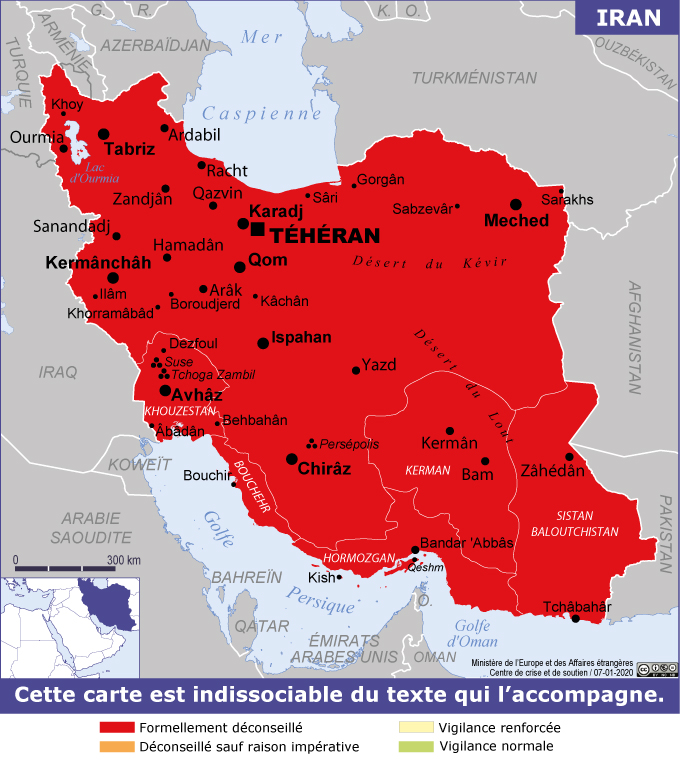
Iran is home to significant ethnic diversity (Kurds, Baluchis, Azeris, Arabs, etc.). Since the 1979 Islamic Revolution, it has been ruled by a theocratic regime. Power is concentrated in the hands of the Supreme Leader, Ali Khamenei, who holds absolute religious and political authority. Though of Azeri origin, he represents a form of national unity, even as centralized power continues to marginalize certain minorities. The Iranian president holds only limited power. In 2022, the position was held by Ebrahim Raisi, an ultra-conservative nicknamed "The Butcher of Tehran " for his violent crackdowns on protests. He was replaced in July 2024 by Massoud Pezeshkian, elected with a reformist reputation despite a youth boycott (60% of Iran’s population is under 35).
III. A COUNTRY GRIPPED BY WIDESPREAD DISCONTENT
In 2022, Iran faced one of the most severe social upheavals in its recent history. For years, the country has endured a multifaceted economic crisis, worsened by international sanctions. The national currency, the rial, has lost much of its value, causing persistent inflation on basic consumer goods. In some regions, water, electricity, and medicine shortages are common. Especially among youth, unemployment remains high despite solid educational levels. This economic hardship is compounded by strict social restrictions, particularly targeting women. The compulsory veil, public behavior surveillance, morality police interventions, and employment access restrictions via public sector quotas maintain constant social control. In this context, the gap between Iranian society and its institutions continues to widen. A large part of the population, especially women and youth, expresses a growing desire for freedom, equality, and political participation. In recent years, protests have multiplied (student, social, political) but have been harshly suppressed, with core demands left unaddressed. Simultaneously, freedom of expression and press censorship have intensified. Independent newspapers have been shut down, internet access restricted, and journalists and activists regularly arrested, as denounced by international NGOs.
IV. TIMELINE OF THE FIRST PHASE OF THE STRUGGLE
V. THE OUTBURST OF SOCIAL PROTEST
In this tense climate, Mahsa Jina Amini was arrested and later died on September 16, 2022, in Tehran, for allegedly wearing her veil "incorrectly." Images of her coma, witness reports of police brutality, and the circumstances of her death sparked a national outcry. Her death became a symbol of widespread discontent. Within days, protests erupted in several cities demanding justice, freedom, and an end to institutional violence. The slogan “ Woman, Life, Freedom ” became the rallying cry of a broader movement that challenged not just the morality police, but the entire political and social system. While the government tried to suppress the protests with force, the movement persisted, bolstered by the Iranian diaspora and echoed globally.
VI. LAUNCH AND SPREAD OF THE PROTEST MOVEMENT
The “ Woman, Life, Freedom ” movement emerged immediately after Mahsa Jina Amini’s death was announced. Initially centered in Iran’s Kurdish region, the protests spread nationwide within days, fueled by collective emotion. Despite internet restrictions, social media facilitated mobilization. The movement was decentralized, with no official leaders, yet widely coordinated via Instagram, Twitter, and Telegram, platforms used to share slogans, videos, and protest guidance. Women led the charge, followed by students and youth. Acts of civil disobedience surged: in streets, schools, universities, and public transport. Outside Iran, the diaspora played a key role by relaying events, organizing gatherings, and drawing global media attention. Viral images of women cutting their hair or burning their veils became international symbols. This spontaneously launched movement became one of Iran’s largest popular mobilizations since 1979, proving the power of collective action even under authoritarian repression.
VII. A VOICE OF THE IRANIAN MOBILIZATION
VIII. CONSEQUENCES OF THE MOBILIZATION AND REGIME RESPONSE
The "Woman, Life, Freedom " movement faced intense repression from the outset. In December 2022, under international pressure and amid nationwide protests, Iranian authorities announced the dissolution of the morality police. This gesture, aimed at calming global public opinion, was vague and unconfirmed by any official decree. In practice, repression and hijab laws remained. By April 2024, new enforcement operations (like “ Operation Noor ”) resumed under different names. Authorities swiftly implemented various control and deterrence measures:
- Closure of universities and schools,
- Regular internet shutdowns and messaging app bans,
- Mass arrests of protesters, journalists, activists, etc.
- Systematic use of force.
According to several human rights NGOs, over 500 people were killed, including minors, and more than 20,000 arrested between September 2022 and January 2023. Repression included swift trials: at least ten people were executed for protest-related acts. In March 2024, a UN fact-finding mission concluded that actions by Iranian authorities may constitute crimes against humanity due to the systematic nature of the crackdown. As the state’s response grew brutal, new forms of protest emerged. Mass demonstrations gave way to quieter, persistent actions:
- Refusal to wear the hijab in some public spaces,
- Graffiti, chants, and symbolic acts shared online,
- Protest acts by cultural, sports, and civil society figures.
In April 2024, the regime launched the Noor plan to strengthen hijab enforcement; abolishing it was a key demand. Patrols increased, and bills institutionalizing a “ culture of chastity ” are under review. Repression continues. On July 22, 2024, Iranian police shot at a car carrying 31-year-old Arezou Badri, severely wounding her. Police allegedly aimed to seize the vehicle under hijab law enforcement. The 2024 election of Massoud Pezeshkian, seen as moderate, has not led to significant change. While he mentioned opening debate on veiling, his power is constrained by the Supreme Leader.
IX. OPERATIONAL LESSONS
1. Decentralize to Counter Repression
The movement was vulnerable due to targeted repression of its leaders. Concrete actions:
- Maintain horizontal organization through small autonomous groups.
- Avoid single spokespeople, who are too exposed to repression.
- Document actions anonymously and transmit them through external relays.
Goal: Make the movement harder to dismantle while keeping information flowing.
2. Use New Forms of Communication Strategically
Internet reliance allowed the regime to censor and paralyze mobilizations. Concrete actions:
- Train activists in cybersecurity.
- Develop alternative communication channels (encrypted messengers, VPNs, offline apps).
- Ensure constant activity from dissenting sources.
Goal: Keep activists connected and inform the public while bypassing censorship and surveillance.
3. Strengthen Intergenerational Mobilization
The movement lacked resonance in some segments, despite historic male support. Concrete actions:
- Promote participation from ethnic minorities, youth, and women.
- Support initiatives beyond major urban centers.
- Build discreet alliances with unions and academics.
- Create accessible content for different social groups (using local languages).
Goal: Root the mobilization across all of Iranian society.
4. Structure Opposition in the Diaspora
The diaspora remained fragmented without real leadership, limiting impact. Concrete actions:
- Amplify voices of prisoners, families, and repression victims.
- Multiply op-eds, testimonies, and advocacy in international media.
- Unify opposition groups in exile.
Goal: Increase political pressure on the regime and raise international awareness.
X. CONCLUSION
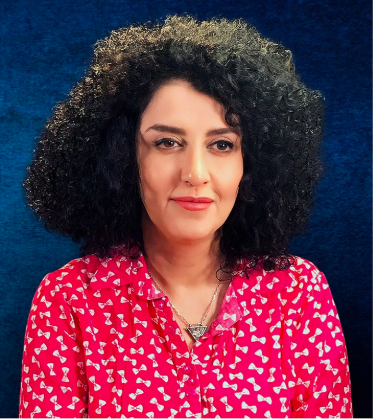
Despite violent and systematic repression, the “ Woman, Life, Freedom ” movement remains a powerful symbol of resistance against Iranian state authority. Authorities have deployed numerous repressive tools: police violence, censorship, mass arrests, and executions. Yet, the movement lives on through solidarity actions and activism that must be coordinated and structured to sustain the struggle. On the second anniversary of Mahsa Jina Amini’s death, Narges Mohammadi announced a hunger strike by 34 political prisoners from Evin Prison, in support of the Iranian people and against government oppression . This movement, which went beyond the hijab issue, stands as a broader call for freedom, equality, and justice. It testifies to the resilience and will for change of the Iranian people.
XI. SOURCES
- Amnesty International, 09/11/2024, Two years after the “Woman, Life, Freedom” uprising, impunity prevails for the crimes committed
- Amnesty International, 12/10/2024, The new law on mandatory veiling intensifies oppression of women and girls
- Encyclopaedia Universalis , 04/14/2025 (access), Iran - Middle East
- Franceinfo, 01/04/2025, Iran: After temporary release of Nobel Peace laureate Narges Mohammadi, her lawyer highlights “uncertain fate”
- L’Humanité , 09/16/2024, In Iran, 34 women from Evin Prison launch hunger strike, two years after Mahsa Amini’s death
- Le Monde , 04/30/2024, In Iran, the morality police return in force, Ghazal Golshiri
- Patrick MACINTYRE, Radio Canada, 09/15/2024, Two years after Mahsa Amini’s death, repression has “intensified”
Support Fondemos
Every donation helps us continue producing independent analysis.