
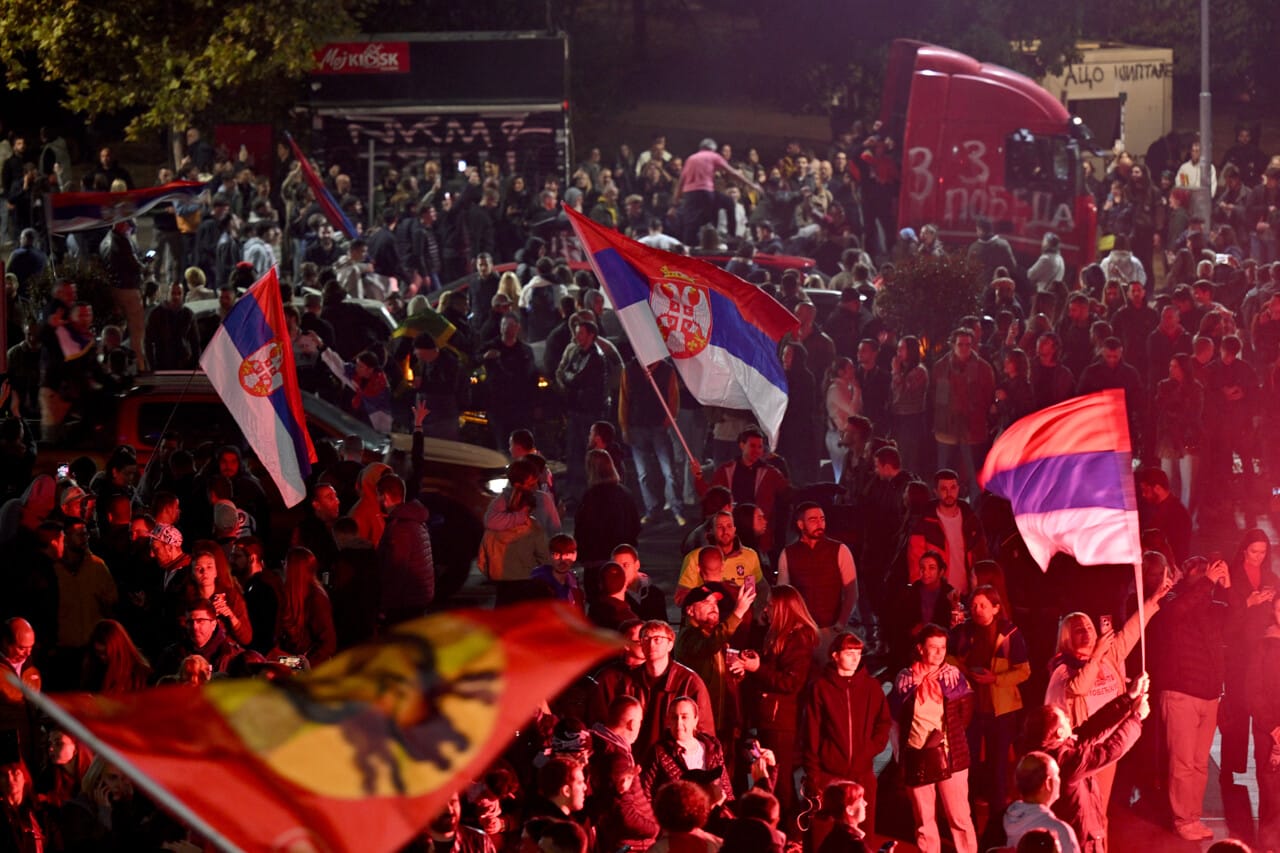
Serbia’s result is being read as a surprise. Yet it answers a question CANVAS had put in writing two weeks earlier, confirming its intuitions as much as it exposes its blind spots.
In the October issue of the Journal of Democracy, Breza Race Maksimovic of CANVAS and Jamila Raqib of the Albert Einstein Institution asked what nonviolent action still has to offer. The doubt is legitimate: democracy in the world has fallen back to its 1978 level, and nearly three-quarters of humanity lives under autocratic rule.
Their answer is nonetheless clear: concluding that nonviolence is outdated mistakes the symptoms for the cause. The method has not failed; movements have stopped renewing it.
Authoritarian regimes know that mass repression backfires, and they prefer “smart repression”: targeted arrests, legal harassment, financial strangulation, digital surveillance, disinformation. They bet on attrition rather than confrontation, so that exhaustion, not defeat, ends campaigns. Movements, for their part, have reduced strategic nonviolent struggle to street protest, mistaking visibility for leverage. Finally, the authors challenge the way these movements are judged. Only one criterion counts, the fall of the incumbent; results are expected within months; and what movements prevented, such as a blocked law or a failed coup, is ignored. By that measure, almost all of them look like failures.
On 25 October, the Student List won more than half the vote and a majority of the 250 seats in Serbia’s parliament; Aleksandar Vučić conceded defeat that same evening, before the final count.
Yet the Serbian regime matched the portrait of modernized authoritarianism point for point. It did not imprison people en masse. It installed spyware on the phones of activists and journalists, as Amnesty International established, exposed its critics to tabloid smear campaigns, and punished them through their jobs. Such a regime, as CANVAS puts it, does not need to arrest everyone: it only needs everyone to believe they could be next. When faculties sided with their students, it cut university salaries to a fraction of their former level, sometimes to nothing for months, and the president went so far as to promise teachers potatoes instead of pay.
The Serbian campaign applies, one by one, the lessons the article draws.
- First lesson: the strongest pressure comes from noncooperation. By blockading their faculties for months, students took a whole part of society out of normal life. Their marches from town to town then carried the mobilization into villages the government thought it owned.
- Second lesson: nonviolent discipline must be prepared. For two years, students endured arrests, surveillance and smears, cars drove into their gatherings, and they never struck back. In Belgrade in March 2025, students in yellow vests stewarded the crowd; in case of violence or infiltration, blue flares were to signal that it was time to leave. This discipline denied the regime the pretext it was looking for and allowed grandmothers, farmers and people who had never protested to join the movement. According to Erica Chenoweth’s research, the scale of participation is the strongest predictor of a campaign’s success.
- Third lesson: a leaderless movement gives the regime less to grip and can draw support more broadly. For more than a year, over eighty student assemblies in six university cities proposed, interviewed and vetoed names to build the list. Their rules excluded students, members of the ruling coalition, opposition party officials and extremists. By standing aside themselves, the students forestalled two accusations: using the movement to build careers, or fronting for the opposition. The 250 candidates selected, professors, doctors, artists and athletes, were respected long before they stood for office; a cardiologist from Novi Sad headed the list. Their views diverged, which pro-government media portrayed as chaos; yet this is what allowed almost every voter to find someone on it they trusted. Several opposition parties withdrew their own lists to back it.
- Fourth lesson: a movement must be judged over time. Nearly two years separate the collapse of the canopy at Novi Sad railway station, which killed sixteen people on 1 November 2024, and the election victory. An assessment made in early 2025 would have counted this movement among the failures.