Timeline
- 20 August 1960 Senegal's independence. Léopold Sédar Senghor becomes president.
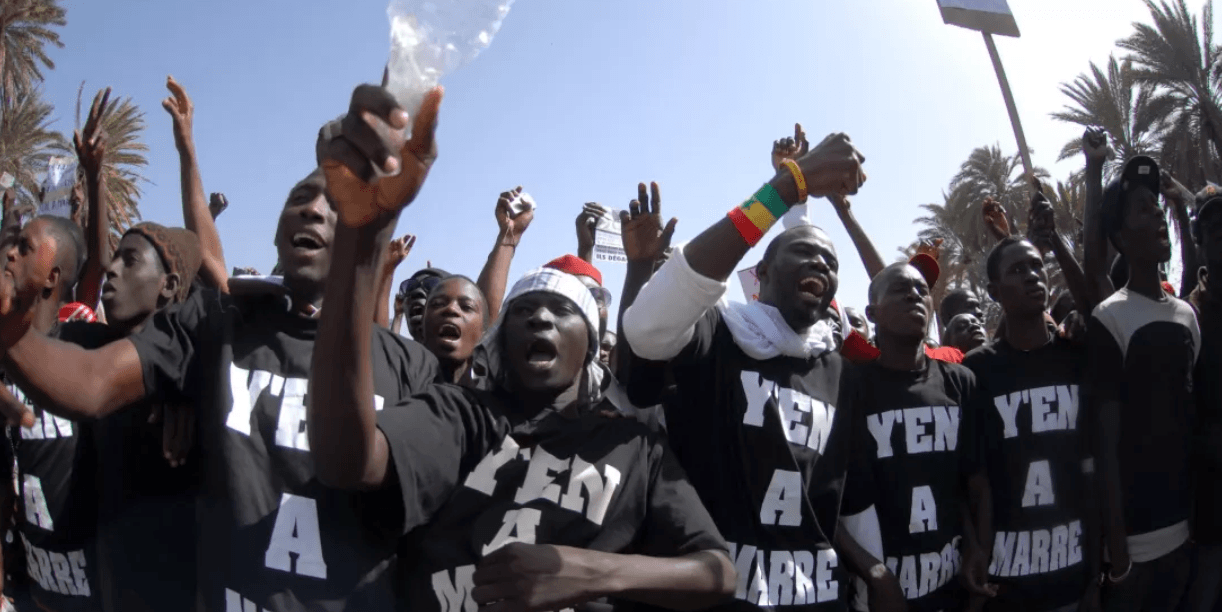
- 2011-2012 Y'en a Marre mobilises against Wade's attempt at a third term. Wade loses the election to Macky Sall.
- 24 March 2024 Bassirou Diomaye Faye elected with 54%. Ousmane Sonko appointed Prime Minister on 2 April.
- September 2024 Revelation of hidden debt amounting to 11.5 billion.
- 31 March 2026 Enactment of a law tightening the repression of homosexuality.
- 22 May 2026 Sonko dismissed from the Premiership by Faye.
- 26 May 2026 Sonko elected President of the National Assembly, becoming the second-highest authority in the State.
Key points
As of 2026, Senegal remains the only country in continental Francophone West Africa never to have experienced a military coup since independence, and has seen four peaceful transfers of power.
Yet the 2019-2026 cycle has subjected this model to unprecedented strains: an unconstitutional postponement of elections, dozens of deaths during protests, a legislative clampdown on individual freedoms, and hidden public debt revealed to exceed 130% of GDP.
The democratic resilience observed in March 2024 (an election held within constitutional deadlines, a peaceful transfer of power) owes less to the intrinsic solidity of institutions than to the sustained mobilisation of a dense civil society, at the forefront of which stand movements such as Y'en a Marre.
Compared with the trajectories of its neighbours - Mali and Burkina Faso having tipped into military coups, Benin having shifted from a democratic model to a competitive authoritarian regime - the Senegalese exception appears to be a fragile, defensive equilibrium rather than an institutional achievement.
The rise to power of the Diomaye Faye-Sonko tandem in 2024, meant to embody a clean break, has after two years revealed internal fractures and a temptation towards centralisation that raise the question: did the 2024 electoral victory save Senegalese democracy, or merely relocate the threat hanging over it?
Introduction
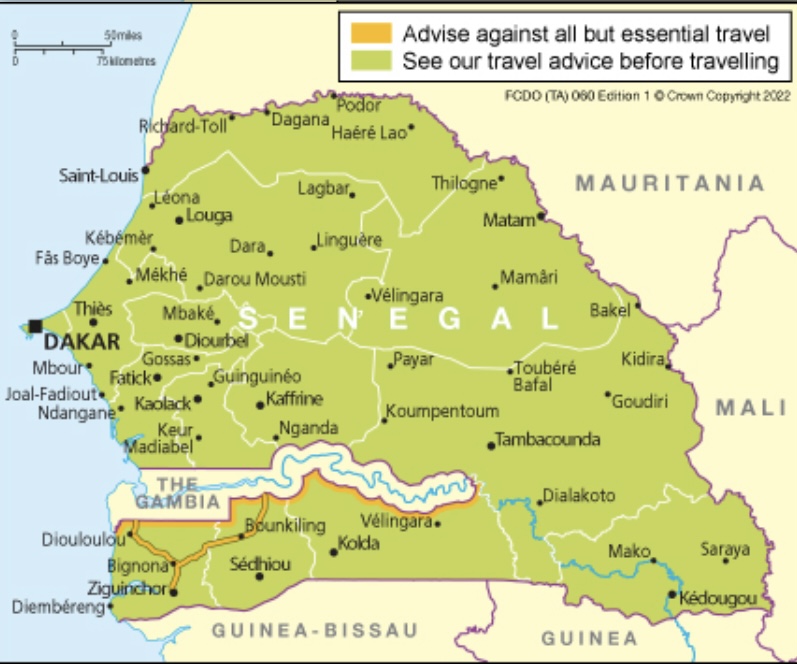
In February 2024, Senegal faced an institutional crisis without precedent since its independence: President Macky Sall repealed the decree convening the electorate, and Parliament voted to postpone the presidential election by ten months. This decision, described by some as a "constitutional coup", triggered massive civic mobilisation. On 15 February, the Constitutional Council invalidated the postponement. On 24 March, the election was held, and Bassirou Diomaye Faye was elected in the first round with 54% of the vote - the third peaceful transfer of power in three decades.
The Senegalese paradox is summed up in an observation from Le Monde in July 2023: "The widespread tribute paid to a leader who did nothing more than respect his country's Constitution gives a measure of the worrying general state of democracy in West Africa." This sentence aptly captures the relative nature of the Senegalese exception. Between 2020 and 2023, eight coups d'état destabilised the Sahel - Mali, Burkina Faso, Niger, Guinea. During this same period, Senegal held its elections, changed government, and maintained peaceful alternation of power. This institutional continuity is remarkable only when set against regional instability. Senegal is an exception only because its immediate neighbours toppled into crisis.
And yet, the 2019-2026 sequence also reveals a systematic erosion of public freedoms, 65 deaths during protests, a politicised judiciary, and an accumulation of hidden sovereign debt. The purpose of this study, then, is to understand what this resilience reveals about the Senegalese model. Does the exception rest on solid institutional criteria, or does it instead rely on contingent human choices - those of leaders, magistrates, mobilised citizens - which are by nature liable to change?
I. A constructed exception: the historical foundations of a West African model
1. A long electoral trajectory in an unstable region
Senegal has been holding elections since 1848, the year in which the communes of Saint-Louis and Gorée obtained the right to vote. In 1946, this right was extended to the entire population, and since 1963, eleven presidential elections have taken place, three of which produced a peaceful transfer of power: in 2000, when Abdoulaye Wade replaced Abdou Diouf; in 2012, when Macky Sall succeeded Wade; and finally in 2024, in the election that brought Bassirou Diomaye Faye to power.
Yet, over the same period, its immediate neighbours experienced radically different trajectories. Mali underwent three coups d'état, Burkina Faso five. Between 2020 and 2023 alone, eight coups destabilised the Sahel, leaving Senegal untouched. This trajectory corresponds to what the political scientist Samuel Huntington identifies as the "two-turnover test", which Senegal thus passed as early as 2012. However, Huntington himself noted that such consolidation offers no guarantee of immunity: Benin, a democratic model in the 2000s that became an authoritarian regime under Patrice Talon, is proof of this.
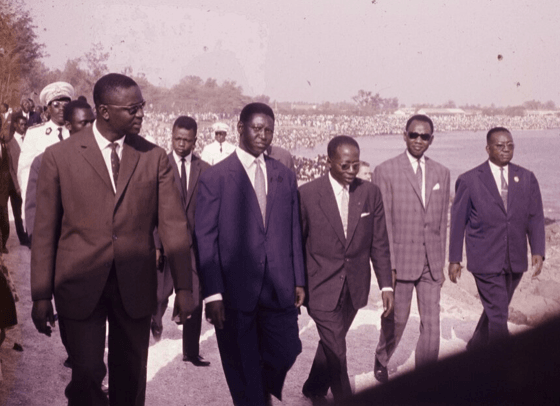
Senegal stands out in that, at several critical junctures - 1966-1974 (one-party rule), 2012 (Wade's attempt at a third term), 2024 (Sall's postponement) - political actors chose to return to democratic rules. Léopold Sédar Senghor, Senegal's first president (1960-1980), initially consolidated a highly presidentialist regime, but from 1974 onwards he also chose to gradually reintroduce multi-party politics. This choice shaped the possibility of future transfers of power and, with it, Senegal's democratic exception. The journalist Ibou Fall, who devoted a biography to him, states that Senghor laid the groundwork for a democratic state and knew how to relinquish power with grace, adding that his successor Abdou Diouf could therefore do no less than acknowledge his defeat to Abdoulaye Wade in 2000 and step down, and that Wade in turn followed his example in 2012 - highlighting Senghor's foundational role in the country's democratic legacy.
2. A stabilising institutional and cultural architecture
On paper, Senegal has an institutional architecture similar to that of other African countries, with a Constitutional Council, a national army, and a tradition of dialogue. But the Senegalese difference lies less in the structure itself than in its animation - that is, in the way actors choose to respect it.
The professional army as a founding political fact
At independence in 1960, Senegal's first leaders instilled the concept of the "nation-army", stipulating that the armed forces should serve the nation alone, never partisan or religious interests. Sixty-five years on, Senegalese officers still invoke this principle. The Senegalese military academy, founded in 1924, trains carefully selected elites, making the Senegalese army a central actor in national development. General Babacar Gaye maintains that the army has always been conscious of its responsibilities and guided by the general interest, that recruitment into its ranks has been based on competence and peer recognition, and that heads of state have, moreover, always refused to surround themselves with praetorian guards selected along ethnic lines. Unlike the armies of Mali or Burkina Faso, which have been responsible for coups d'état following internal tensions and fractures within the chain of command, the Senegalese army has maintained this institutional discipline.
The independence of the Constitutional Council: built, not inherited
The Constitutional Council operates on the same principle. Formally, it is weak, since five of its members are appointed by the president, which should make it dependent. Yet in February 2024, this same Constitutional Council invalidated an election postponement decided by the president (discussed further below). This is explained, first of all, by a protective constitutional framework: the 2001 Constitution grants constitutional judges criminal immunity and a strict regime of incompatibilities. But such a framework also exists in other countries that fail to honour it. The main reason lies chiefly with the members themselves, and notably with its president, Mamadou Badio Camara, a magistrate with thirty years' experience, who chose independence despite the pressures brought to bear. This ruling of 15 February marked an unprecedented extension of the Council's powers: for the first time, the Constitutional Council declared itself competent to review, on substantive grounds, both the constitutional law and the administrative act organising a national election, and annulled them.
Secularism and religious mediation
Senegal, a country that is 95% Muslim, is constitutionally secular. The State thus recognises no official religion, nor does it involve itself in religious affairs. Moreover, the practice of Islam here is characterised by Sufi brotherhoods (Mouridism, Tijaniyya), spiritual organisations that have historically played mediating roles in political conflicts and that advocate peaceful coexistence between religious traditions. During the 1962 crisis between Senghor and his prime minister Mamadou Dia, it was the brotherhoods' religious leaders and the Archbishop of Dakar who helped bring about a resolution.
However, Senegalese secularism functions less as a clear-cut separation between State and religion than as a coexistence: religion remains a structuring dimension of public life and public policy. The State does not seek to impose any dogma, but it grants religious communities a legitimate role, particularly in education. This permeability between the religious and political spheres creates a distinctive equilibrium - it defuses religious tensions, but it also means that religious references regularly shape official political discourse.
3. A dense and structured civil society: the Y'en a Marre legacy
The density of Senegalese civil society constitutes the final pillar of the democratic model. Unlike the first three institutional pillars (the army, the Constitutional Council, secularism), this density does not rest on a formal architecture but on a structured capacity for rapid and politically independent mobilisation. This capacity is itself explained by renewed collective choices and an accumulation of political practices rooted in the struggles of the preceding three decades. Thus, according to Afrobarometer, 75% of Senegalese believe that even the head of state must be subject to the law - an attachment to democratic order that is both informed and institutionalised. Formal attachment to democratic principles only translates into democratic resilience when it materialises as political mobilisation. It is at this level that the Senegalese trajectory stands apart.
The Y'en a Marre movement emerged in January 2011. Founded by the rappers Thiat and Kilifeu of the group Keur Gui, together with the journalist Fadel Barro, the movement was born out of the daily power cuts paralysing Dakar. A few months later, when President Wade announced he would seek a third term - constitutionally impossible since 2001 - Y'en a Marre mobilised. The slogan "Touche pas à ma constitution" ("Hands off my constitution") became a rallying cry, and the concept of the "Nouveau Type de Sénégalais" (New Type of Senegalese) - a vigilant, active citizen refusing political complacency - shaped a generation of young urban dwellers. Thirteen years later, when Sall announced the postponement of the election in February 2024, the same civic reflex was reawakened. More than a hundred organisations came together in the Front de Résistance, and Y'en a Marre mobilised once again. This continuity reveals a Senegalese "muscle memory", reflecting lessons drawn from 2012, when Senegalese citizens fought to defend the Constitution.
Senegal had distinguished itself from Mali or Burkina Faso through this capacity for repeated mobilisation. However, this civic density is gradually eroding. Y'en a Marre's leading figures, notably Fadel Barro, have been absorbed into the political system (taking up positions within the administration) and now declare their loyalty to the Sonko government. The movement itself no longer has the mobilising capacity it once claimed. This erosion reveals a structural limitation: civic density can only be sustained if the organisations that underpin it retain their autonomy from those in power.
II. The test of 2024: what the crisis reveals about the regime
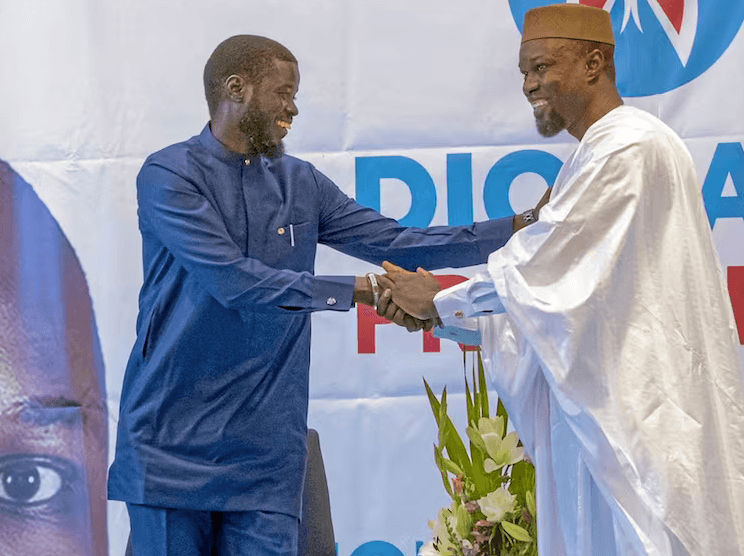
1. The 3 February postponement: a "constitutional coup"
On 3 February 2024, President Macky Sall repealed the decree convening the electorate for the presidential election of 25 February - less than three weeks before the vote. Parliament, controlled by the ruling majority, voted to postpone the election to 15 December, ten months later. Sall justified this decision by citing a dispute between Parliament and the Constitutional Council: two Council judges were said to have been accused of corruption by a disqualified candidate. But it was precisely this announcement that triggered the crisis. Within three days, Dakar was in uproar. Opposition MPs were forcibly ejected from Parliament, internet access was cut across the country, and more than a thousand people were arrested. The Vice-President of the National Assembly, himself a presidential candidate, spoke openly of a "constitutional coup". Here, those in power were using legal tools to cancel an election that displeased them, three weeks before it was due to take place.
This attempt by Macky Sall illustrates a form of competitive authoritarianism in the sense given to the term by Steven Levitsky and Lucan Way: elections that exist formally, but which those in power distort massively through legally available tools. Sall criminalised the opposition (Sonko was convicted of "corrupting the youth"), controlled the media, and manipulated the electoral calendar. Within a matter of days, Senegal slid towards this hybrid regime in which democracy exists in name only.
2. The twofold response: the Constitutional Council and civil society
On 15 February, the Constitutional Council invalidated the postponement. This ruling marked a historic piece of case law, since for the first time in Senegal, the Constitutional Council declared itself competent to review, on substantive grounds, both the constitutional law and the administrative act organising a national election. Mamadou Badio Camara, President of the Council and a magistrate with more than thirty years' experience, maintained what he described as an equidistant and independent stance despite competing pressures from the government, the opposition, and civil society. This ruling rested on the choice of one man, not on the abstract force of an institution.
Alongside this judicial intervention, more than a hundred organisations came together in the Front de Résistance. The composition of this coalition reveals its structural breadth: electoral coalitions, social movements led by Y'en a Marre (thereby reviving the civic reflex of 2011-2012), religious organisations, universities, and the press. This organisational density created a high political cost for any brutal crackdown. At the same time, the Senegalese Democratic Party attempted a legal challenge to secure the postponement, but the Supreme Court dismissed it, invoking the Constitutional Council's "plenary jurisdiction". The judicial architecture thus locked itself shut: no loopholes to bypass the Constitutional Council, and no possibility of appeal against its rulings.
What ultimately saved the election was less the abstract solidity of institutions than their concrete animation by individual actors - a courageous judge, a mobilised civil society - which rendered the power grab politically untenable. The Constitutional Council did not act in isolation, then, but under pressure from civic mobilisation dense enough to forbid it from backing down.
3. A victory at unequal cost
The election was held on 24 March 2024. Bassirou Diomaye Faye won 54% of the vote in the first round. This victory, however, came within a political system under strain: between 2021 and 2024, 65 people died during protests, more than a thousand were arrested, internet access was cut on several occasions, Walf TV was temporarily suspended, and Reporters Without Borders recorded a 31-place fall in its World Press Freedom Index. The crisis crystallised around a fundamental tension: "politics seized by electoral law" versus "electoral law seized by politics". On one side, those in power sought to instrumentalise electoral rules to control the process; on the other, institutions and civic mobilisation demanded respect for the constitutional timetable.
To resolve this conflict, the Constitutional Council had to accept a compromise. It imposed the holding of the election before the end of the mandate (thereby meeting the constitutional objective), but this victory came at the cost of breaches of ordinary electoral law. The campaign ran for 12 days instead of the 21 prescribed by the electoral code, and the 80-day period required between the convening of the election and the vote itself was not respected. The Constitutional Council justified these departures on the principle that exceptional circumstances call for exceptional measures. The fundamental Constitution was safeguarded at the price of breaches of ordinary electoral laws. This hierarchy of norms exposes the real fragility of the Senegalese model: it can hold firm, but only by degrading its own rules in the process.
III. The post-2024 period: the exception confronted with its own internal limits
1. The Faye-Sonko duo, or the test of power-sharing
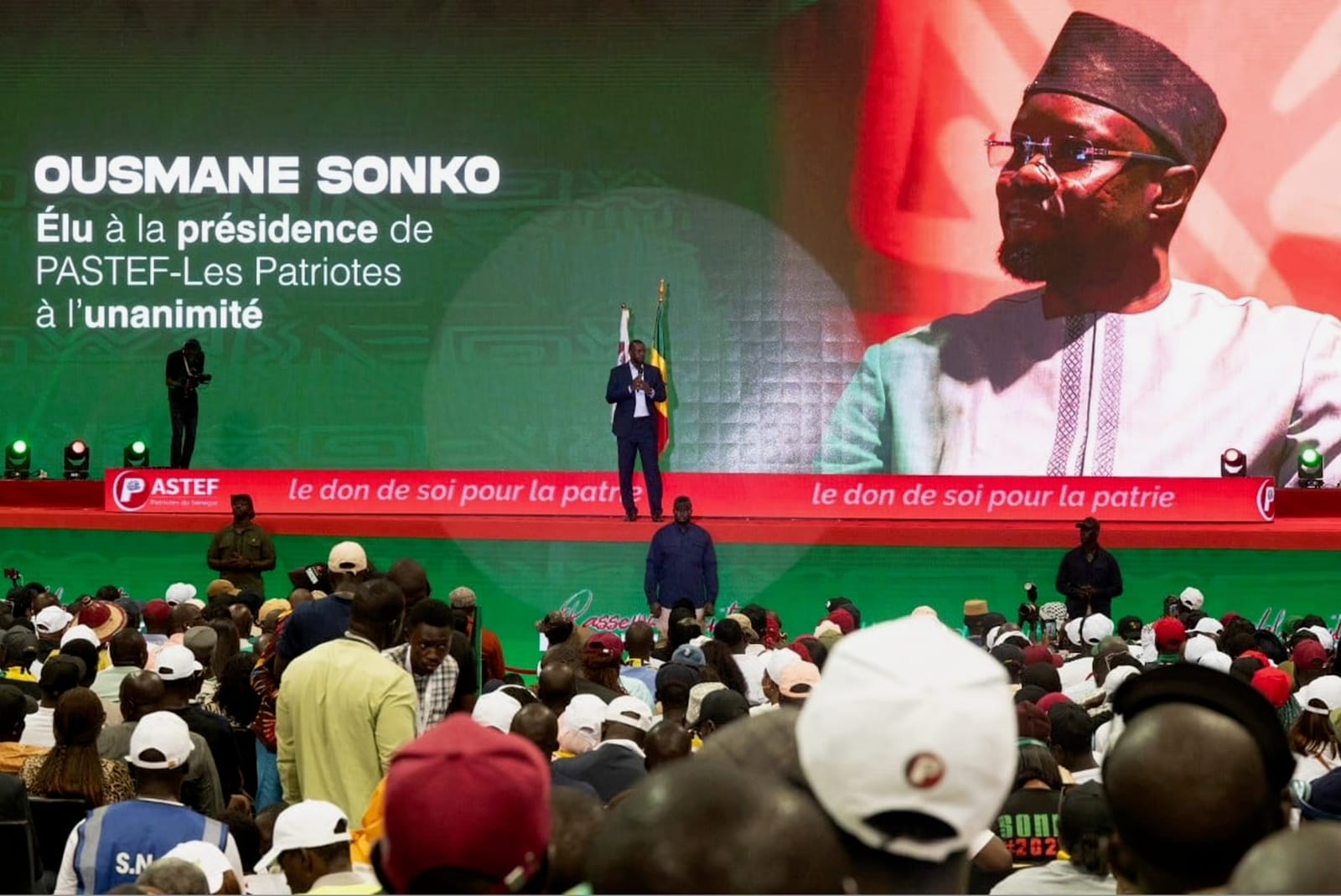
The 2024 campaign was built on the slogan "Diomaye égal Sonko" ("Diomaye equals Sonko"). This formula symbolised a fusion of legitimacies - the tandem embodied the break with the Sall regime. Bassirou Diomaye Faye, imprisoned a few weeks before the election, represented the persecuted victim. Ousmane Sonko, a figure from the Y'en a Marre movement turned political leader, embodied urban youth and the denunciation of corruption. Sonko, however, could not stand in the presidential election himself: a conviction handed down in January 2024 for defaming the former Minister of Tourism had rendered him ineligible. It was therefore Faye who stood in his place. Together, they won the election with 54% of the vote and formed the government.
But the two men gradually became rivals, and the break accelerated abruptly on 22 May 2026. That day, during a session of questions to the government at the National Assembly, Sonko openly criticised the presidency, stating that he was not a Prime Minister who obeyed blindly and agreed to everything. A few hours later, President Faye signed the decree dismissing Sonko and dissolving the government. This open rupture brought to a head two years of mounting tension: in November 2025, Faye had appointed Aminata Touré, Sall's former Prime Minister, to head the Coalition Diomaye Président - a signal that Sonko's position was being weakened. In December 2025, Sonko had publicly announced his candidacy for the 2029 presidential election, placing the two men in direct competition.
Yet the dismissal barely weakened Sonko politically. As early as 26 May, four days after his removal, he was elected President of the National Assembly, placing him as the second-highest authority in the State, with parliamentary immunity. With his party, Pastef, holding 130 of 165 seats, Sonko commands a parliamentary majority capable of blocking any new government. This configuration, unprecedented in Senegalese political history, has created institutional paralysis and heightened the risk of a direct confrontation between the two former allies. This parliamentary majority had immediate, tangible effects: on June 29, a constitutional amendment proposed by Pastef lawmakers was adopted despite opposition from the Diomaye government, whose amendments were all rejected. Sonko used this amendment - which weakens the president’s powers and strengthens those of the Assembly - to impose his constitutional vision against that of the head of state. This institutional standoff revealed that the rift between Sonko and Diomaye was no longer merely a personal conflict, but a battle to redefine the balance of power.
This conflict reveals a structural dynamic well known in Africa's hyper-presidentialised regimes: two competing legitimacies cannot coexist indefinitely. Benin illustrated this - long a democratic model, it slid under Talon into "democratic backsliding" through electoral changes, a muzzled press, and an unfinished judicial reform, all carried out through legal and gradual means. Nothing at present indicates that Faye will follow this path. But the warning signs are accumulating: the concentration of power within Pastef, the persistence of press restrictions, and 136 judicial reforms left unimplemented. Moreover, for the first time since independence, Senegal is witnessing an open rupture between the president and the prime minister. The army, traditionally silent and professional, has become a subject of public debate - something previously unheard of. An absence of clear presidential authority can create conditions conducive to military intervention, a scenario already observed elsewhere in the region. At the same time, the civic density that saved the election in 2024 is eroding: civil society, once mobilised, has fallen silent in the face of the new government's excesses.
2. When the break calls its own coherence into question
On 31 March 2026, the government enacted a law considerably toughening the repression of homosexuality. Sentences increased from 1-5 years' imprisonment to 5-10 years, fines were multiplied and the daily lives of LGBT+ people, marked by the fear of arrest, become very uncertain. It was Prime Minister Ousmane Sonko himself who drove this legislative project. Pastef thus tightened restrictions on individual rights.
Admittedly, the question of homosexuality does not directly concern the political freedoms for which Pastef had fought - the right to protest, freedom of expression, electoral pluralism. But it reveals an implicit political strategy: faced with growing disillusionment over questions of corruption and good governance, the executive has activated an old moral fault line, homophobia, to shore up its conservative electoral base. It amounts, in short, to an admission of weakness: attention must be diverted towards questions of values in order to mask the absence of any real institutional and economic break with the past.
This posture goes hand in hand with the persistence of press restrictions and the absence of substantial judicial reform - the 136 reforms recommended at the 2024 National Conference on Justice have not been implemented. The political outcome is growing disillusionment among the urban youth who had massively supported Sonko. A creeping apathy is settling over Senegalese society, particularly among young people confronted simultaneously with economic crisis (40% below the poverty line), unemployment, and political disillusionment. This apathy is all the more worrying given that civil society, mobilised in February 2024 to defend the elections, has fallen silent in the face of the new government's excesses.
3. The hidden debt and the risk of structural collapse
In February 2025, an audit commissioned by President Faye revealed the scale of the inherited disaster: a "hidden debt" of €11.5 billion, bringing Senegal's real debt burden to 132% of GDP, rather than the 60% officially declared under Sall. The immediate consequences of this hidden debt include exclusion from international bond markets, a triple-notch downgrade of the sovereign credit rating, and dependence on a regional bailout from the WAEMU while an agreement with the IMF remains stalled after months of negotiation.
Political history shows, however, that poor democracies in economic crisis are the most vulnerable to democratic backsliding. In a context where 40% of Senegalese live below the poverty line and 50% are under 19 years old, a structural adjustment plan imposed by the IMF risks producing massive social discontent. And social discontent, in this unstable regional context, tends to push governments towards greater repression. This is precisely the breeding ground for the democratic backsliding observed elsewhere on the continent, in Benin, Côte d'Ivoire, or Mali. The economic crisis could thus complete what internal tensions within the government have already begun.
IV. Conclusion
The Senegalese exception still exists in 2026, but it can no longer be measured against the formal criteria that once made its reputation. The country continues to avoid the military takeovers that have struck its Sahelian neighbours, as well as the outright seizure of power observed elsewhere. The label of "exception" remains apt, but it becomes misleading if it implies that Senegalese institutions are inherently more solid than those of their neighbours. This exception rests on repeated human choices: Senghor gradually opening the way to multi-party politics; an army that refuses political adventurism; Mamadou Badio Camara defending the independence of the Constitutional Council in February 2024; a civil society that mobilised in 2024.
But the exception is fragile, for it depends on a balance of power - civil society's capacity to force institutions to function as they should. And this balance is shifting. Apathy is setting in, civic mobilisation is running out of steam, and civil society has fallen silent in the face of the new government's excesses. At the same time, the deadlock between the president and the prime minister creates an unprecedented ambiguity as to where power truly resides. The army, for the first time, has become a subject of public debate - a sign of structural instability. The economic crisis weighs heavily. Yet Senegal's history also shows that its civic density can reawaken. Ultimately, everything will depend on the choices made, in the months ahead, by the women and men who call it home.
Operational lessons
Unity of different civil society components
The “Front de Résistance” of February 2024 held because more than 100 heterogeneous organisations (trade unions, religious groups, academics, media, youth) mobilised independently of party control. This cross-cutting nature made repression politically costly. However, the absence of sustained coordination platforms (unlike Taksim Solidarity) limited the movement's ability to sustain itself beyond the crisis.
Continuity and organisational memory
Y'en a Marre succeeded in 2024 by reactivating the "muscle memory" of 2012 - shared vocabulary, existing networks, recognised figures. But this strength relies on stable and independent leaders. Once these figures integrate into the political system (Fadel Barro in administration, Thiat weakened), mobilisation capacity erodes dramatically.
Lack of continuity in democratic oversight
Senegalese civil society is reactive - it mobilises in response to crises (constitutional coup, authoritarianism), but disorganises itself once the immediate threat recedes, leaving a void where gradual institutional drift (press restrictions, absent reforms) progresses without visible opposition.
The military as a critical variable of instability
For the first time since 1960, the Senegalese military becomes a subject of public debate. The unprecedented breakdown between president and Prime Minister creates ambiguity over who actually holds power, potentially creating conditions for military intervention. The military's professionalism has held for 65 years through repeated human choices of non-intervention, but faced with lasting institutional paralysis, this doctrine could waver.
Information available, but no autonomous public sphere
Social media played a key role in February 2024. But the absence of powerful independent media limits the ability to build broad and lasting consensus on major issues. The press remains vulnerable to censorship and control, fragmenting the public narrative.
(1) Jeune Afrique - Senghor Laid the Foundations for Democratic Transfers of Power in Senegal (8 October 2021)
(2) Afrique XXI - Senegal: Senghor’s Endless Hyper-Presidentialism (15 March 2024)
(3) Jeune Afrique - Senegal: An Army Unlike Any Other (12 May 2022)
(4) RTS (Radiodiffusion Télévision Sénégalaise) - The Evolution of the “Nation-Army” Concept in Senegal: From Republican Consolidation to Strategic Commitment to Development (n.d.)
(5) Africa Center for Strategic Studies - Why Democracy Has Endured in Senegal (2024)
(6) Afrobarometer - Senegalese Support the Principles of the Rule of Law, Dispatch No. 1155 (25 March 2026)
(7) Le Monde - Democracy in Africa: The Senegalese Exception (5 July 2023)
(8) The Conversation - Democracy in West Africa: The Senegalese Exception (2024)
(9) Jeune Afrique - Senegal Does Not Need a Messiah: How Bassirou Diomaye Faye Reined In Ousmane Sonko (18 May 2026)
(10) Jeune Afrique - Senegal: The Coalition Diomaye Président, a Declaration of War on Ousmane Sonko (10 November 2025)
(11) Mehdi Ba - Diomaye Sonko: Guardian of the Constitution vs Guardian of the Revolution, Jeune Afrique (15 November 2025)
(12) Afrique XXI - Senegalese Debt: The Government’s Perilous Choice (20 February 2025)
(13) Jeune Afrique - A Senegalese Default Would Be a Catastrophe: When West African Finance Comes to Dakar’s Rescue(5 March 2025)
(14) Le Monde - Senegal Enacts Law Toughening the Repression of Homosexuality (31 March 2026)
(15) La Nouvelle Tribune - Sonko Removed from the Premiership: Deliverance or Starting Gun for 2029 (22 May 2026)
Support Fondemos
Every donation helps us continue producing independent analysis.