
Timeline
- 21 February 2020 Dissolution of the Future Forward Party: the Constitutional Court bans Thanathorn from politics for ten years.
- June 2020 Forced disappearance of activist Wanchalerm Satsaksit, reigniting online mobilization.
- 18 July 2020 Free Youth stages the first major street protest in Bangkok.
- 10 August 2020 Ten demands for reform of the monarchy made public at Thammasat University.
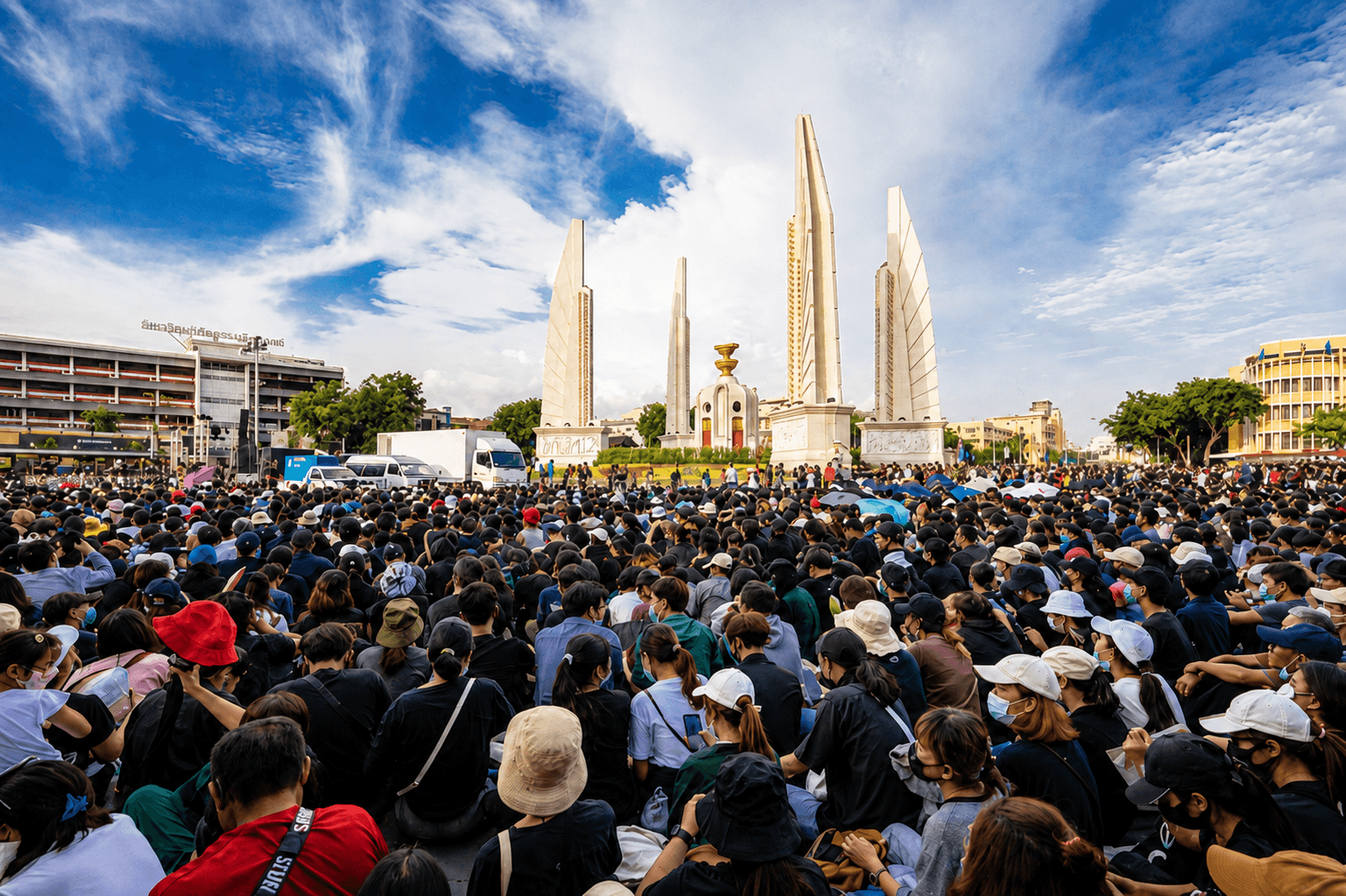
- 16 August 2020 Between 20,000 and 25,000 protesters gather at Democracy Monument, the peak of the first wave.
- 17 November 2020 Parliament rejects most proposed amendments; violent clashes leave around fifty injured.
- 10 November 2021 The Constitutional Court rules monarchical reform unconstitutional, a decisive blow to the movement.
Key points
Thailand's 2020-2021 protest movement was the country's largest popular mobilization since 2010. It marked a historic break by openly challenging the monarchy, an institution that had previously remained largely beyond public criticism.
Inspired by the Hong Kong protests, the movement adopted a horizontal, leaderless model that combined social media, decentralized mobilization, and innovative repertoires of action, making it highly resilient in the face of repression.
The movement succeeded in placing its core issues at the centre of public debate, sustaining the political engagement of a new generation of activists, and prompting an unprecedented debate on the Constitution and the monarchy's political role.
However, it failed to achieve its main strategic objectives: Prayut's government did not fall, no major constitutional reform was enacted, and the status of the monarchy remained unchanged.
The case therefore highlights the paradox of contemporary leaderless movements: they can be highly effective tactically, both in mobilizing supporters and withstanding repression, yet struggle to translate that momentum into institutional victories when confronting a hybrid regime with substantial coercive power.
Introduction
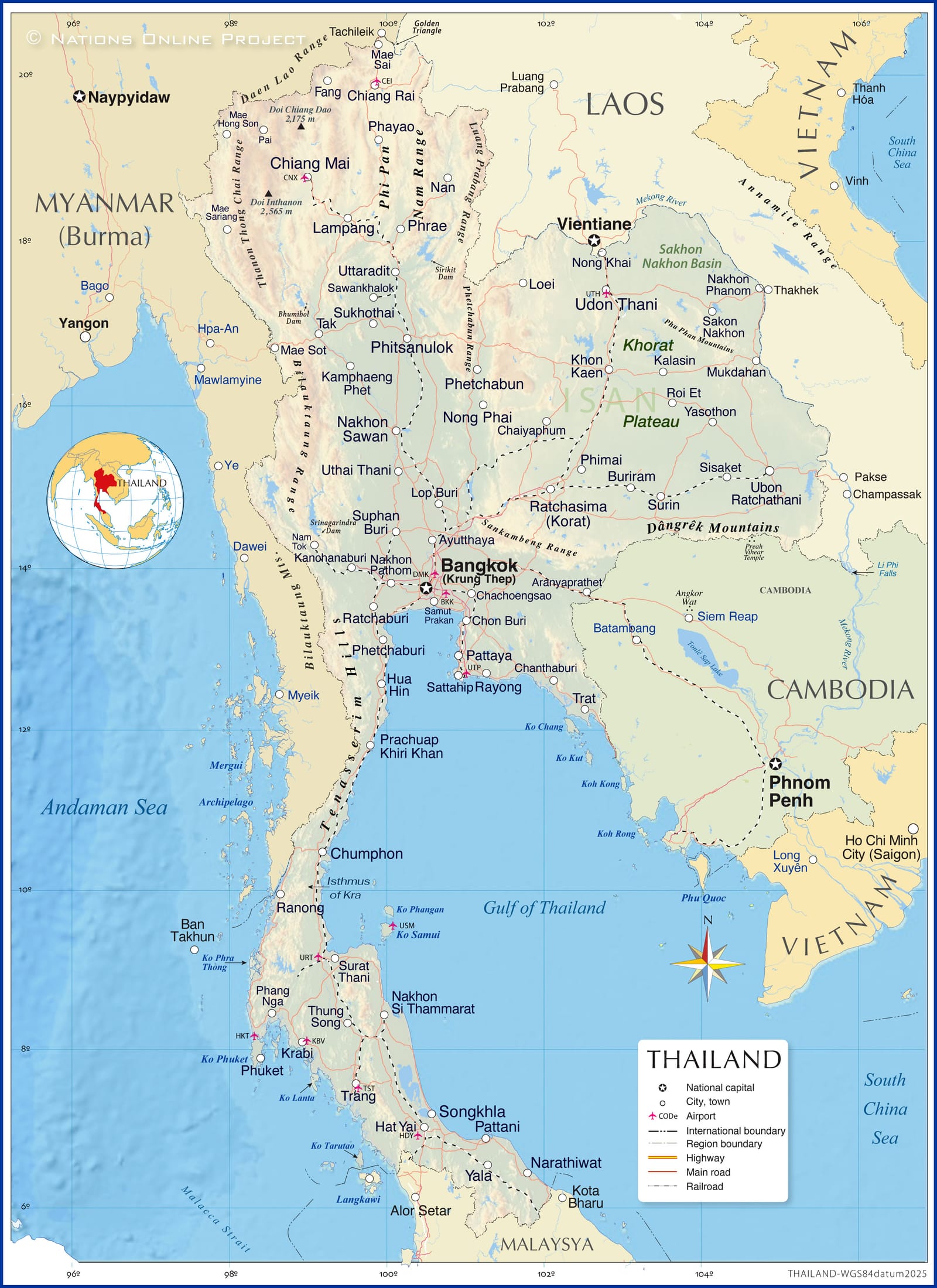
Between February 2020 and the end of 2021, Thailand experienced its largest wave of popular protest since the 2010 clashes involving the Red Shirts. Driven by a generation of university and secondary-school students, the movement broke new ground in two major respects: first, it mounted the first direct challenge in the kingdom's modern history to the monarchy's political role and wealth; and second, it adopted a deliberately leaderless, horizontal organizational model directly inspired by the 2019 Hong Kong protests.
Operationally, the movement's principal achievements lay in reshaping the political agenda, breaking the discursive taboo surrounding the monarchy, and maintaining tactical resilience in the face of repression. It shifted the centre of gravity of Thai political debate and brought forth a new generation of activists. Yet by the end of 2021, it had secured neither Prayut Chan-o-cha's resignation, nor a new constitution that met its demands, nor institutional reform of the monarchy.
I. ORIGINS AND STRUCTURAL CONTEXT
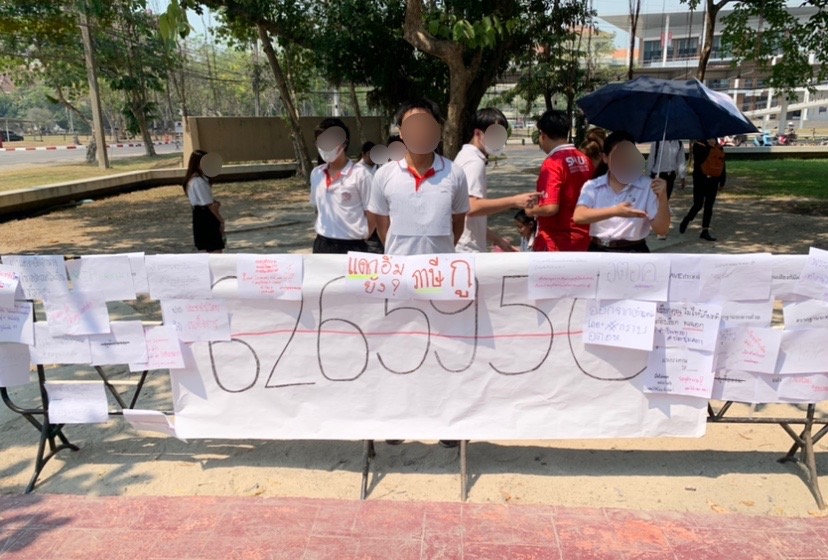
The Thai regime that emerged from the 2014 coup rests on an institutional architecture designed to prevent democratic alternation in power. The 2017 Constitution, drafted under the junta, combines an elected House of Representatives with a 250-member Senate, approximately 200 of whose members are appointed by the military, with the two chambers jointly electing the prime minister. This arrangement enabled General Prayut Chan-o-cha, who led the 2014 coup, to remain in power after the 2019 election, fuelling among younger generations a sense of structural democratic deadlock.
The spark came from the dissolution, in February 2020, of the Future Forward Party (FFP), a reformist party that had won strong support among young voters in the 2019 election, and the ten-year political ban imposed on its leader Thanathorn Juangroongruangkit. This ruling by the Constitutional Court, based on an unlawful loan of 191.2 million baht found to be in breach of political-party financing laws, triggered spontaneous protests on university campuses, abruptly halted by the COVID-19 pandemic in the spring of 2020.
The movement resumed on a much larger scale that summer, catalysed by the government's political violence embodied by the forced disappearance, in June 2020, of exiled activist Wanchalerm Satsaksit, and by mounting economic and social anger intensified by the public-health crisis, which exposed generational inequalities and the contrast between the austerity imposed on the population and the lifestyle of King Vajiralongkorn, then residing in Germany.
This dual sequence, institutional deadlock followed by visible repression, laid the foundations from 2020 onward for a protest movement that would target not just the government, but the very architecture of the regime.
II. FROM SOCIO-ECONOMIC DEMANDS TO A CHALLENGE TO THE MONARCHY
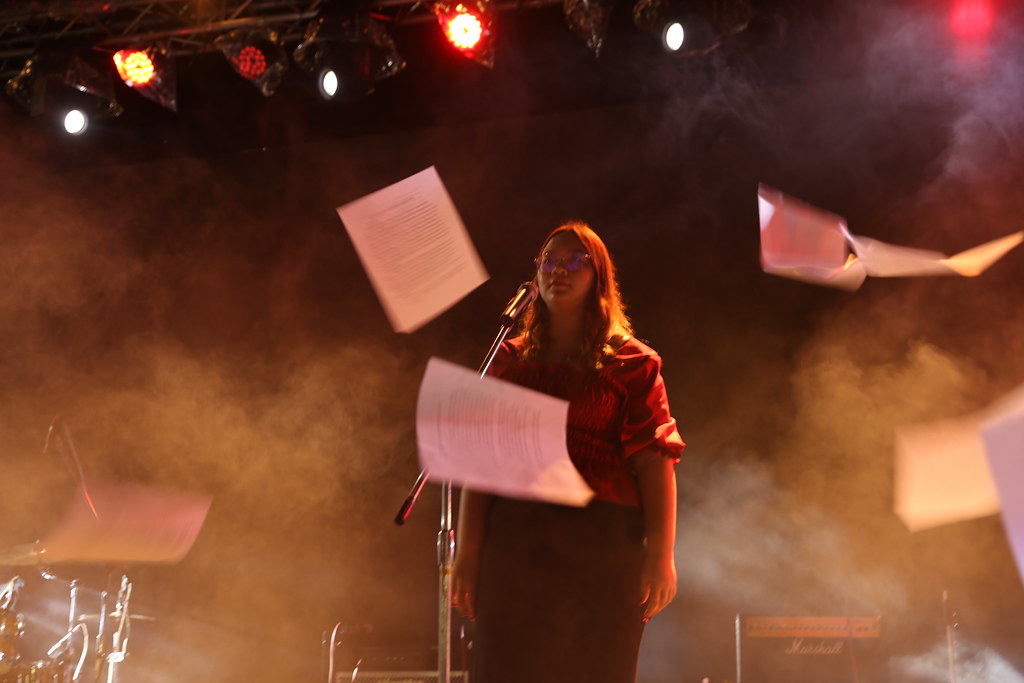
Although initial demands had begun to emerge earlier in the year, the movement coalesced, from August 2020 onward, around three core demands: the resignation of the Prayut government, the adoption of a new constitution drafted by a representative assembly, and reform of both the monarchy and the lèse-majesté law (Section 112 of the Criminal Code), which provides for prison sentences of up to fifteen years for criticism of the monarch.
On 10 August 2020, at Thammasat University, ten specific demands concerning the royal institution were made public: transparency over the King's wealth, an end to direct royal control over certain military units, and the taxation of Crown assets, breaking what had until then been regarded as an absolute taboo.
This gradual radicalization of the movement's demands had an ambivalent effect: it gave the movement its historic distinctiveness and immense symbolic power, but it also hardened the confrontation by making negotiations with the establishment virtually impossible.
By breaking this taboo, the protesters changed the nature of the conflict: it was no longer simply a matter of challenging a government, but the very architecture of power, monarchy included. This shift made de-escalation more difficult for both sides.
III. THE MOVEMENT IN PRACTICE: A THAI-STYLE "OPEN-SOURCE PROTEST"
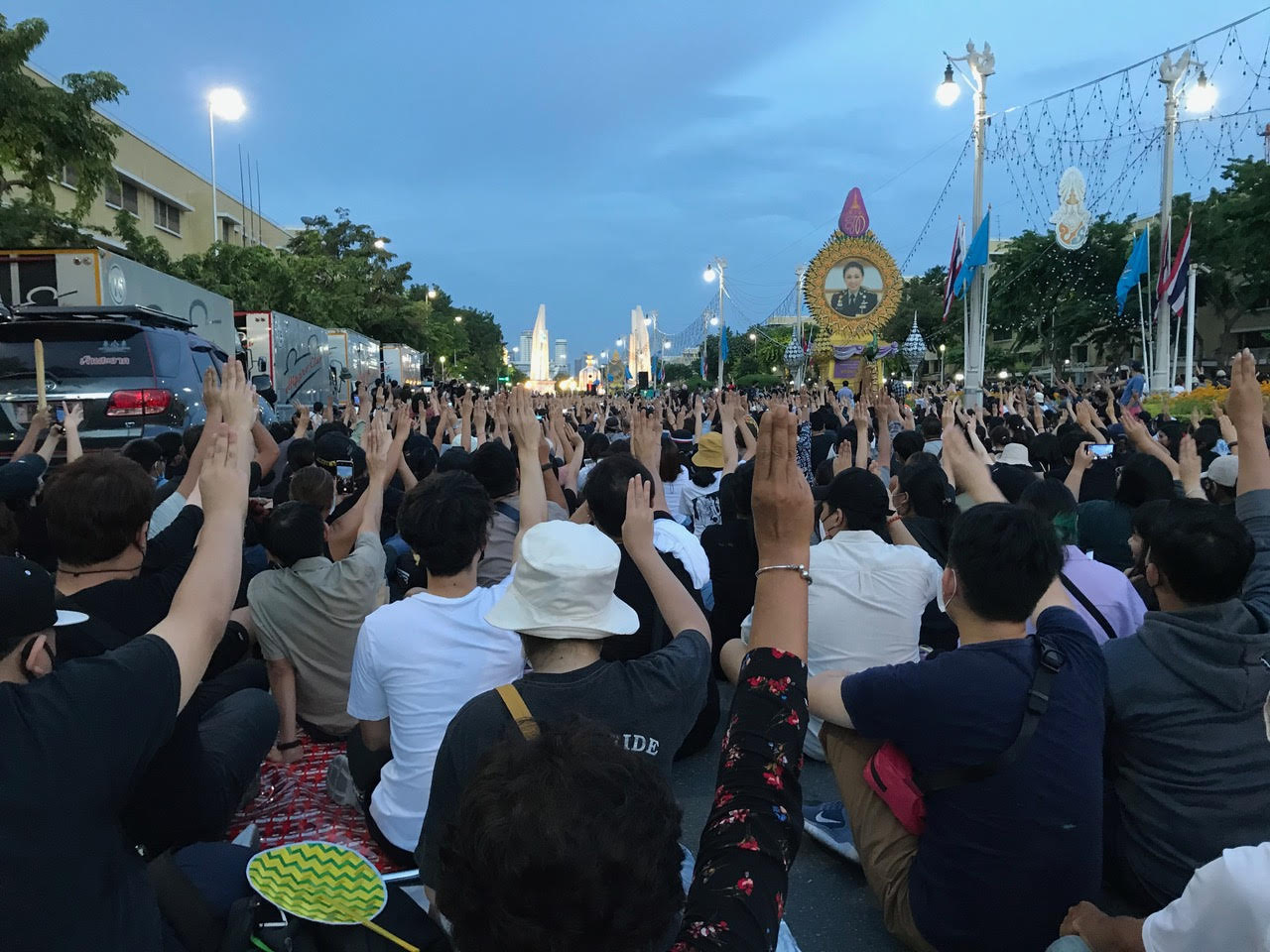
The movement's effectiveness rested first on its ability to lower substantially the cost of participating in collective action. In an authoritarian setting, where joining a structured organization can quickly expose individuals to surveillance, activists favoured flexible and readily reproducible forms of engagement: flash mobs, hashtags, themed gatherings, and shared cultural references allowed people to take part without joining a hierarchical organization. This low barrier to entry facilitated rapid, large-scale mobilization, particularly among university and secondary-school students. Research by ARTICLE 19 and ISEAS show that social media allowed rallies to be organized at very short notice, meeting points to be changed in response to security constraints, and protests to be coordinated simultaneously across universities, secondary schools, and provincial areas.
This lightweight organizational architecture was accompanied by remarkable tactical adaptability. When demonstrations were banned, public-transport stations closed, organizers arrested, or attempts made to block Free Youth's digital channels, the movement systematically adjusted its methods. Rallies could be relocated, broken into smaller gatherings, or rescheduled within hours, while new digital tools took over whenever a network became harder to access. This flexibility was especially evident in October 2020, when the tightened state of emergency failed to prevent flash mobs from taking place almost daily across Bangkok.
The movement's symbolic dimension was another key source of its effectiveness. Its many references to popular culture, from the three-finger salute drawn from Hunger Games to costumes inspired by Harry Potter and the extensive use of social-media visual codes, served several strategic purposes: reducing fear by making engagement feel less daunting, making messages immediately intelligible to a generation immersed in digital culture, facilitating international circulation, and increasing virality online.
This dynamic was strengthened by the gradual expansion of the protest coalition. Initially centred on the Free Youth group, the movement came to encompass complementary actors: Free People extended mobilization beyond the student community, secondary-school studentsbecame full-fledged participants, LGBTQ+ networks and artistic and cultural collectives introduced new forms of action, while K-pop fan communities placed their expertise in crowdfunding and content amplification at the movement's disposal. Organizations such as iLaw and Thai Lawyers for Human Rights provided essential legal expertise.
Repression itself sometimes produced the opposite of the effect intended by the authorities. The police violence of 16 October 2020 illustrates this boomerang effect: the use of water cannons against unarmed protesters prompted widespread public outrage and strengthened solidarity networks. Reuters reported that K-pop fan communities turned their anger into fundraising campaigns, purchases of protective equipment, and financial support for legal assistance to prosecuted protesters. Amnesty International and ARTICLE 19 concluded that several police interventions involved excessive or unlawful use of force. Although repression increased the risks faced by protesters, it also helped, at several points, to broaden the social support the movement enjoyed.
Despite a largely closed institutional environment, the protests succeeded in exploiting certain openings in the political system. The campaign launched by iLaw for constitutional reform, backed by more than 100,000 signatures, compelled Parliament to place the issue on its agenda. More broadly, the protests triggered an unprecedented national debate over the legitimacy of the 2017 Constitution and the functioning of Thai institutions.
By the end of 2021, several objectives could be regarded as partially achieved. The movement first succeeded in stripping the monarchy debate of some of its sacrosanct status, by bringing detailed reform proposals on a previously taboo subject into the public sphere, even though criticism of the monarchy has since 2023 repeatedly served as grounds for dissolving progressive parties, as with the dissolution of the Move Forward Party on 7 August 2024. It also succeeded in **building mass opposition to the government during the summer and autumn of 2020,**while bringing forth a new generation of activists whose networks, organizational practices, digital skills, and litigation capacity largely survived the decline of street protests.
This interim assessment illustrates the paradox already identified: real tactical effectiveness, which alone is not enough to make a power holding a coercive monopoly yield, as the State's response shows.
IV. THE STATE'S RESPONSE: GRADUATED, MULTI-PRONGED REPRESSION
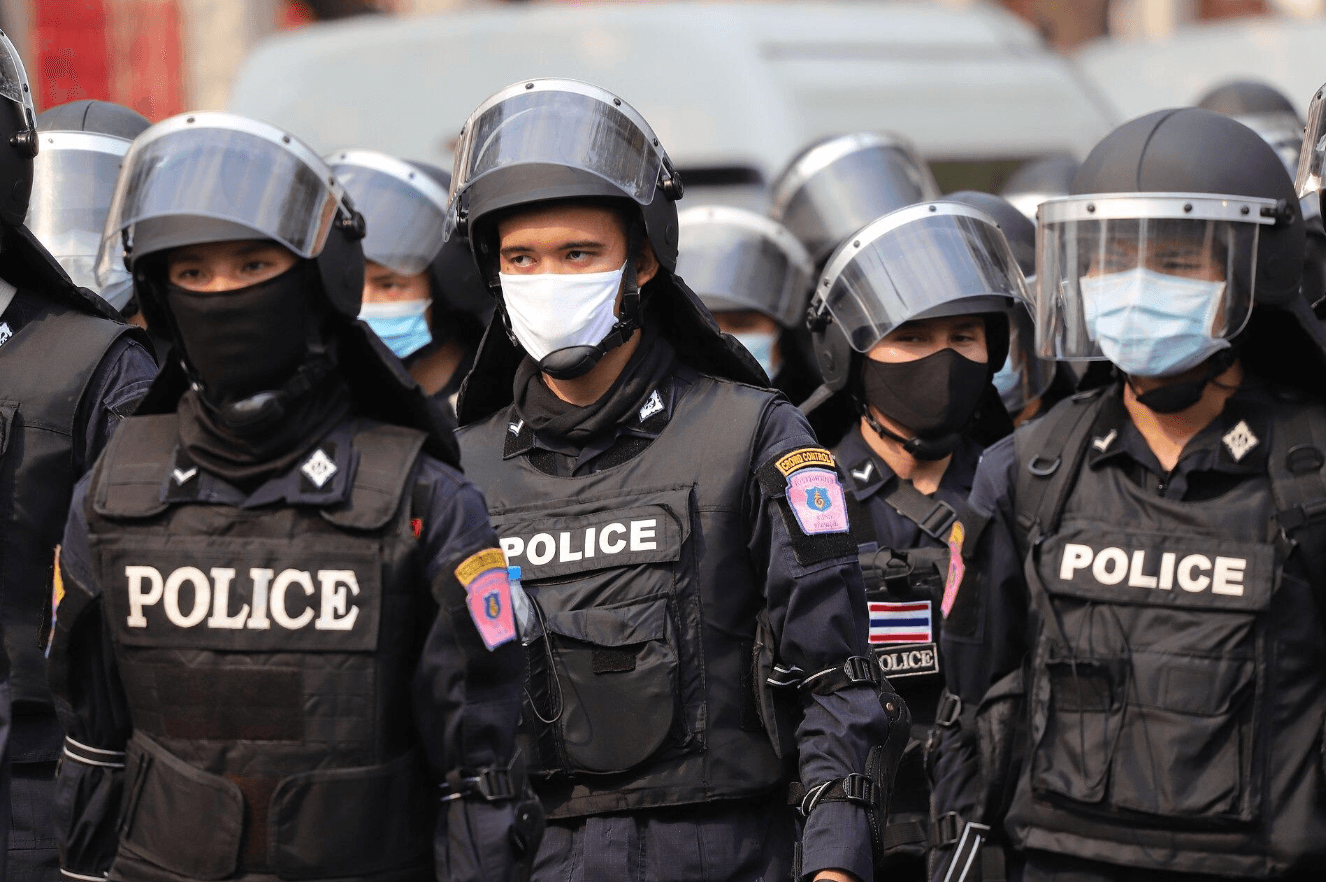
In response to the mobilization, the state deployed a range of measures characteristic of a hybrid regime, preserving formal democratic institutions while using legal, judicial, and coercive instruments to neutralize the opposition. These measures included extensive use of the public-health emergency decree to ban gatherings, arbitrary arrests and repeated pretrial detention of the same activists, military information-warfare units tasked with discrediting organizers, online censorship, the mobilization of pro-government royalist groups, and, above all, a growing use of Section 112 on lèse-majesté from late 2020 onward, after Prime Minister Prayut announced that "all laws" would henceforth be enforced against protesters.
This repression also saw a physical escalation, with water cannons, tear gas, and rubber bullets used near Parliament in November 2020, followed by the death of a protester in October 2021, struck by live ammunition.
Legally, the Constitutional Court's decision of 10 November 2021 marked a turning point, ruling that demands for monarchical reform amounted to an attempt to overthrow the regime, in a ruling widely described as a "judicial coup."
V. ASSESSMENT: OPERATIONAL SUCCESS, STRATEGIC FAILURE
Measured against its stated objectives, the 2020-2021 movement ended in failure.. Prayut Chan-o-cha remained in power until the 2023 election. Although his departure cannot be attributed directly to the protests, they played a major role in shaping public debate and legitimizing demands later taken up by the Move Forward Party (MFP), which came first in the 2023 election on a progressive platform strongly influenced by the aspirations voiced in 2020. The party mobilized a young, urban, university-educated electorate sociologically close to the movement's participants.
However, no significant constitutional reform aligned with the protesters' demands was adopted, Parliament having rejected most proposed amendments in November 2020; the monarchy was not reformed and Section 112 remains fully in force. Leading figures in the movement were prosecuted, some spending a cumulative total of several hundred days in detention, before the Constitutional Court's November 2021 ruling dealt a decisive blow to the street movement.
From 2022 onward, mass demonstrations dwindled, under the combined effects of judicial repression, activist exhaustion, and growing internal divisions, notably over the poorly managed introduction of symbols associated with communism, which weakened the movement's public image.
Over the medium term, several operational gains deserve to be highlighted: an unprecedented capacity for mobilization, with around 350 protest events recorded between July and December 2020 alone and attendance peaking between 20,000 and 100,000, achieved without a centralized party structure; organizational resilience in the face of targeted repression, thanks to horizontality and redundancy among its groups; and a generational shift channelled into the electoral arena, the issues championed in the streets having been institutionalized by the Move Forward Party political successor to the dissolved Future Forward Party.
Thailand's 2020-2021 movement thus illustrates a characteristic divide within contemporary leaderless protests: tactical effectiveness in mobilization on the one hand, but a limited capacity to convert that dynamic into institutional victories when confronting a power holding a coercive monopoly.
Operational lessons
Horizontal Organization
By lowering the cost of participation in collective action and reducing dependence on central figures, leaderless structures strengthen resilience to targeted arrests and enable rapid adaptation.
Symbolic Creativity
References to popular culture and graphic codes reduce fear of participation and greatly increase the online reach of mobilizations.
Command of the Digital Ecosystem
The coordinated use of social media and visual codes facilitates mobilization and reduces the impact of censorship attempts.
Broadening the Coalition
Bringing in actors from civil society, cultural collectives, and online communities diversifies available resources and sustains mobilization beyond the original activist core.
Diffuse Leadership, Limited Negotiation
Decentralized organizations resist repression better, but struggle to turn leverage into political compromise, lacking recognized interlocutors.
Short Term, Long Term
A protest cycle can suffer institutional defeat while permanently transforming political culture and shaping later electoral realignments.
Counterproductive Repression
Police violence or prosecutions can strengthen solidarity and fuel support campaigns, but this effect remains temporary if repression hardens over time.
Successful Tactics, Unfinished Strategy
A movement can mobilize on a massive scale without securing reforms when facing a power that holds a coercive monopoly and locked institutions.
- (1) Duncan McCargo, “Disruptors’ Dilemma? Thailand’s 2020 Gen Z Protests”, Critical Asian Studies 53, no. 2 (2021)
- (2) Charlie Campbell, “Her Family Was Ousted From Power in Thailand”, Time, 18 April 2023
- (3) Amy Gunia, “A Thai Opposition Party That Pushed for Democratic Reform Has Just Been Disbanded”, Time, 21 February 2020
- (4) Amnesty International, “Thailand: Authorities Must Investigate Disappearance of Exiled Activist Wanchalearm Satsaksit”, 5 June 2020
- (5) Rebecca Ratcliffe, “Thailand’s Lese Majesty Laws Explained in 30 Seconds”, The Guardian, 7 August 2024
- (6) Rebecca Ratcliffe, “Thousands Gather in Thailand for Anti-Government Protest”, The Guardian, 19 September 2020
- (7) ARTICLE 19,“Thailand: Sedition, Lèse-Majesté Charges Against Protesters Proliferate”, 25 November 2021; ISEAS – Yusof Ishak Institute, analyses 2020-2021
- (8) Rebecca Ratcliffe, “Thousands of Thais Defy Crackdown on Protests in Bangkok”, The Guardian, 17 October 2020
- (9) Thai Lawyers for Human Rights,“Statistics of Political Cases”, accessed 4 July 2026
- (10) W. Lance Bennett and Alexandra Segerberg, The Logic of Connective Action, Cambridge University Press, 2013
- (11) Amnesty International, “Thailand: NGO Law Would Strike ‘Severe Blow’ to Human Rights”, 2 April 2021
- (12) Reuters,“Thai Court Rules Calls for Monarchy Reform an Attempt to Overthrow the Monarchy”, 10 November 2021
- (13) Rebecca Ratcliffe, “Court Bans Largest Thai Political Party over Pledge to Change Lese-Majesty Law”, The Guardian, 7 August 2024
Support Fondemos
Every donation helps us continue producing independent analysis.