
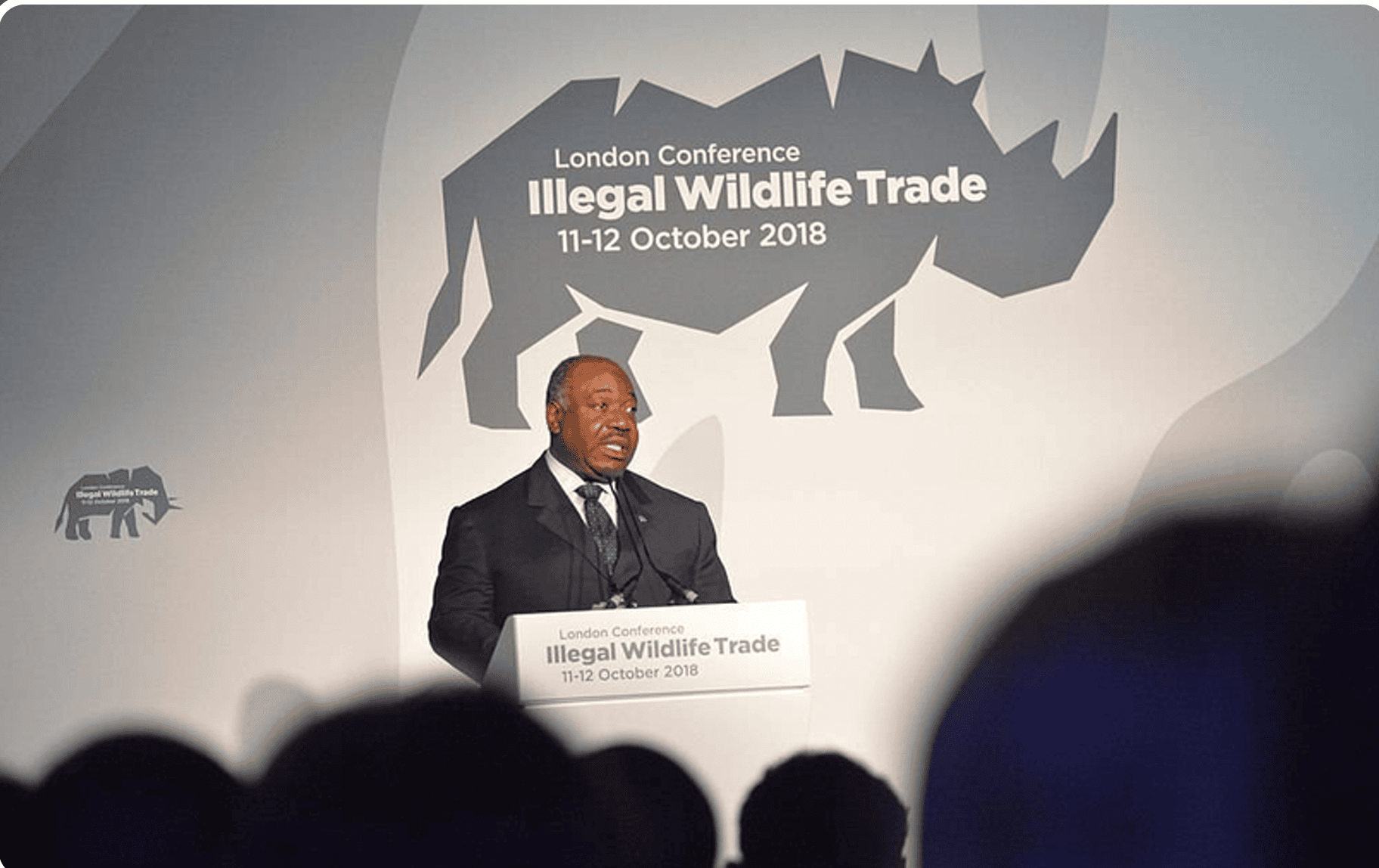
Fabien Blanc Originally published in 'Conflits' magazine A small country with barely 2.23 million inhabitants, Gabon was one of the pillars of Françafrique, largely due to the stability of the Bongo clan. France holds significant interests there, and the country is relatively safe compared to its turbulent neighbors. Gabon is a mid-level oil producer (1), without any notable strategic position, and with a relatively stable recent history. France's interest in Gabon stems from the fact that it has been, alongside Djibouti, Côte d’Ivoire, and Senegal, at the heart of Françafrique: since its independence, the country has long been considered one of the cornerstones of French influence in Africa, especially during the presidency of Omar Bongo (2). It remains one of the African nations where this influence is strongest, notably through the presence of numerous French companies (3) and, above all, a permanent military base (approximately 370 French soldiers are currently stationed there (4)). France has supported the Bongo clan on many occasions, and decisively, helping it remain in power (5), notably during the riots in Libreville and Port-Gentil in 1990 and the 1993 elections. As a result, France's image among the population is relatively negative, with Paris regularly accused of manipulating Gabonese politics. Relations between the two countries have somewhat cooled since Ali Bongo came to power in 2009, against the backdrop of the “ill-gotten gains” affair, which challenged the young president as he sought to diversify his international partnerships. During the 2010 Independence Day celebrations, he reaffirmed his intention to reduce Gabon’s dependence on its former colonizer, declaring that France was no longer Gabon’s exclusive partner. He moved closer to traditional allies (such as Morocco and Saudi Arabia), new Asian partners (like Malaysia), and promoted investments from India, Singapore, and China. During the 2016 elections, the Bongo clan was displeased with Paris's silence, while Ali Bongo and Jean Ping accused each other of being puppets of France. Several French companies encountered difficulties and were forced to leave Gabon (6). In February 2018, the Gabonese government seized the Société d’eau et d’énergie du Gabon (SEEG), a subsidiary of Veolia.
A SAFE COUNTRY
The level of crime in Gabon is relatively low. It is higher in the eastern districts of Libreville and in Port-Gentil than in rural areas, but offenses are generally nonviolent. Petty crime (though on the rise since the crisis) remains low, even if there have been a few armed robberies in areas frequented by foreigners. On the other hand, due to the porous nature of the country's borders (with Equatorial Guinea, Cameroon, and the Republic of the Congo), transnational trafficking, linked to the illegal exploitation of natural resources and wildlife trafficking, is significant. While traffickers may be armed, the remote and uninhabited areas in which they operate largely limit the security risk. There is no presence of South American cartels in Gabon, as the country does not serve as a transit point; drug trafficking (7) remains limited to supplying the (small) bourgeois elite of Libreville. 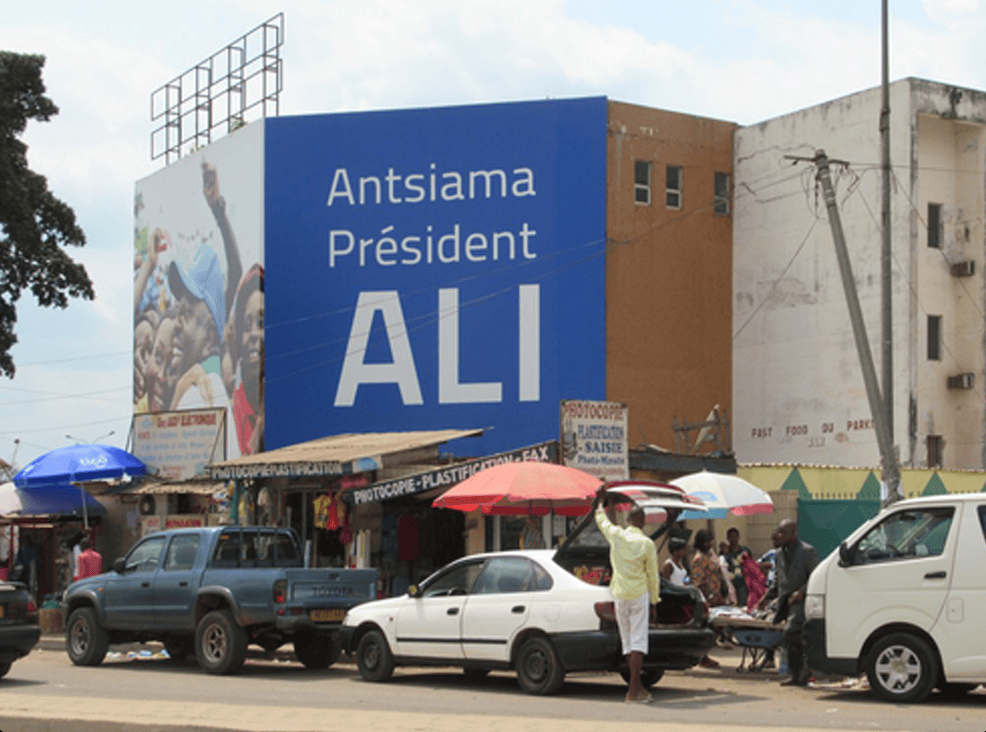
RISK OF INTERSTATE CONFLICT IS LOW
The permanent presence of French military forces in Gabon clearly acts as a deterrent against any acts of aggression from neighboring states. The risks are further reduced by Gabon's integration into the African Union’s Central African Standby Brigade and the strengthening of security cooperation with its neighbors. Recently, relations with Congo-Brazzaville have significantly deteriorated, mainly due to tensions between Presidents Ali Bongo and Denis Sassou Nguesso. The latter suspects the Bongo clan of being responsible for the death of his favorite daughter, Édith, who was married to Omar Bongo. More recently, the Bongo clan has taken issue with Denis Sassou Nguesso’s support for the apparent political ambitions in Gabon of Denis Jr. Bongo, the son of Omar and Édith. As the heir to two ruling families (Gabon and Congo-Brazzaville), Denis Jr. has substantial financial resources and a certain degree of prestige, even though he is still young. Tensions also exist with Gabon’s small northern neighbor, as Gabon has disputed Equatorial Guinea’s sovereignty over three islands (9) since 1972. In 1974, a treaty was signed without resolving the issue, which is driven by oil-related stakes: the delineation of territorial waters between the two countries will determine access to certain oil deposits. In the 1990s, Equatorial Guinea revived the dispute, and with UN mediation, both parties signed a treaty in 2008 allowing the International Court of Justice to decide the matter; the case is still ongoing.
A BIT OF PIRACY
Until recently spared from piracy incidents that affect many of its neighbors in the Gulf of Guinea, Gabon has experienced several attacks since December 2019. A few incidents have occurred, mainly near the anchorage area of Libreville (typically on Sundays at dawn, when attention is relaxed). The pirates, based in the Niger Delta, have repeatedly kidnapped hostages, such as on May 3, 2020, when two fishing vessels were attacked off the capital, and six crew members were taken hostage. As a result, France regularly deploys frigates to patrol the area (10), and Gabon's maritime centers are now ready to use the Yaoundé Architecture Regional Information System (YARIS) platform, which aims to facilitate interstate coordination of maritime security operations in the Gulf of Guinea.
THE TERRORIST THREAT IS CONTAINED
Only one attack has occurred in recent years: two Danish journalists were stabbed in 2017 at a craft market by a 53year-old Nigerien (11) who had been living in Gabon for nineteen years. He had traveled to Libreville specifically (from Booué), claiming to act in "retaliation for the American recognition of Jerusalem as the capital of Israel." Terrorism had historically been nonexistent in Gabon until this attack, and this incident is expected to remain isolated, as no evidence of external support for the perpetrator was found, indicating a "lone wolf" attack. Moreover, the presence of a French military base would enhance security capabilities in the event of a threat escalation. The threat remains considered low in Libreville, although in the medium term, attacks cannot be completely ruled out due to the expansion of jihadist networks in the southern Sahel. Gabon is indeed far from the operational areas of various terrorist groups in West Africa, but the same was once said about Côte d'Ivoire before the Grand-Bassam attack in 2016. Furthermore, Gabon’s borders are highly porous, in a country that is 70% covered by equatorial forest. 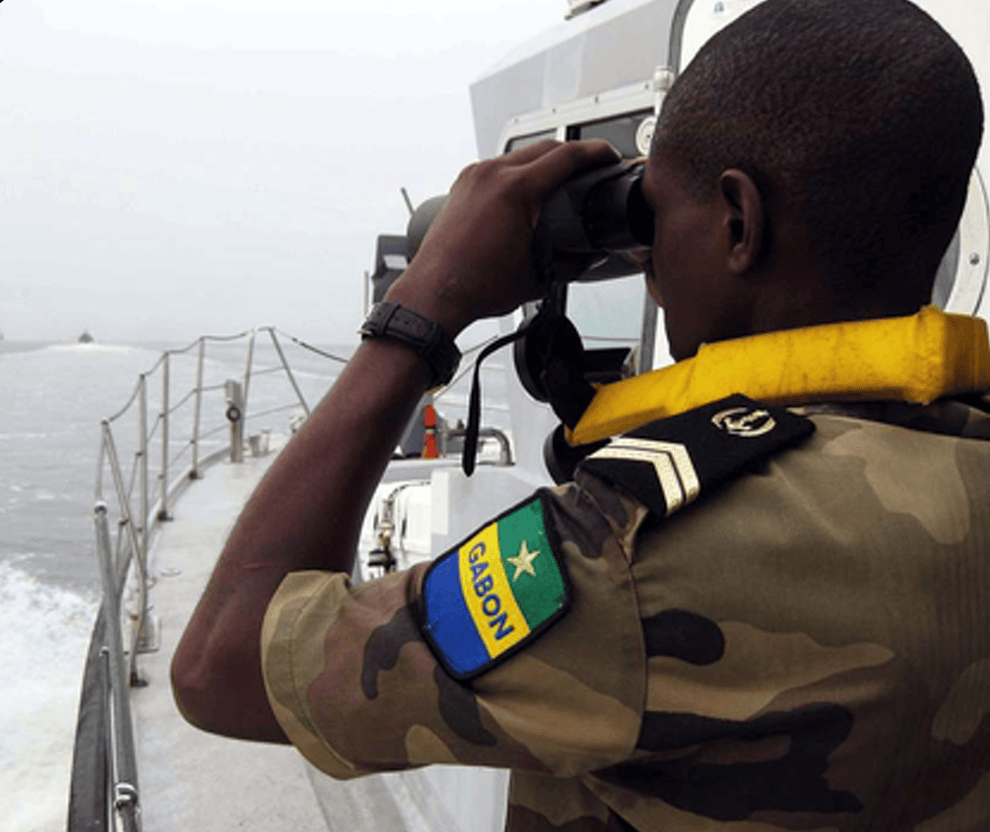
RISK OF POLITICAL IMPLOSION
Gabonese political life is characterized by a significant democratic deficit, with the separation of powers not being guaranteed in practice (12). Additionally, regular electoral frauds are documented, further weakening the legitimacy of the regime and reinforcing sporadic protests in the streets, a source of instability. As aggravating factors, the endemic corruption within the elites is not effectively combated (13), the government rules through a patronage system, and the opposition, which is in the minority and highly divided, is unable to express popular discontent. Furthermore, when opposition members are not bought off through well-paying positions, they are quite regularly arbitrarily arrested. The government can rely on the support of the armed forces to suppress potential protests and compensate for Ali's weak legitimacy, which has been tainted by strong suspicions of fraud during his re-election in August 2016 (14). The announcement of the results led to significant protests and violent clashes in the cities of Libreville, Oyem, Port-Gentil, and Lambaréné. Ali's legitimacy was further undermined by questions about his ability to govern following his stroke in Saudi Arabia in 2018, and his several months of recovery in Morocco. Ali appears to have recovered; he has resumed his activities and meetings, but during his absence, embezzlement of public funds seems to have increased significantly, with his close associates seeking to take full advantage of their position before the eventual fall of the regime. Most importantly, the vacancy of power triggered a clan war within Ali's inner circle. In December 2019, Brice Laccruche Alihanga, a Franco-Gabonese who served as chief of staff and was a strongman of the presidency, was arrested as part of the operation known as Scorpion, accused of embezzling public funds and money laundering. More than just an anti-corruption operation, Scorpion served as a pretext for the First Lady (Sylvia Bongo) and her son Nourredin Bongo Valentin to increase their influence and neutralize Laccruche and about twenty of his associates. The political grip of the Bongo family was thus reaffirmed by the appointment of Ali's eldest son, and his allies took key positions within the government in 2020. A succession strategy is already in place, should the president decide to step down before the next elections. However, Nourredin’s rise could pose an additional risk of instability, as he is widely known to be corrupt and immature (15). The greatest threat to Ali would be if a member of his own clan were to run in the 2023 presidential elections against the official candidate. Ali must, in fact, contend with opponents within his own clan, particularly among his half-brothers: Frédéric, the former head of special services (who was removed from power and appointed military attaché in South Africa), and Christian, who has recently discreetly aligned himself with Denis Sassou Nguesso.
RISK OF SOCIAL IMPLOSION
Ultimately, social discontent, exacerbated by the Covid crisis, remains the main security threat in Gabon. Significant riots could reoccur, especially in 2023, during the upcoming general elections. Protests are likely to take an even more violent turn in Libreville, but especially in Port-Gentil: in this workingclass city, the economy revolves around oil activities, but the steep drop in oil prices has led to the closure of oil subcontracting companies and many job cuts. While GDP per capita is nearly $8,000, this figure means little when considering the vast inequalities created by this rentbased economy (16). The excesses of the Bongo family, the properties in the Paris golden triangle, and the hundreds of millions squandered on ostentatious luxury are well documented and known to Gabonese citizens. In these circumstances, it is also difficult to justify the austerity program announced in June 2018, which, if maintained, would likely provoke strikes and protests initiated by unions. The health situation has so far served as an excuse for the government to restrict gatherings (and thus the sporadic expression of discontent). However, if channeled, these could have served as a safety valve. Instead, at the end of February, when groups of young people (17) took to the streets in one of Libreville's neighborhoods, the situation quickly escalated into clashes with the police, who fatally shot two rioters. The lifting of control measures, now even less justified as the pandemic has slowed in Europe, is likely to be an extremely delicate period. In the end, the capture of the country's wealth by a small clan is not only immoral, but it is also dangerous in the medium term. Because too much corruption is like too much taxation: there is a threshold beyond which even the most resilient populations begin to stir.
SOURCES
1 - 230,000 barrels per day. 2 - 1967-2009. 3 - There were up to 30,000 French people in Gabon, and still 10,000 before the Covid crisis, but many fewer now. 4 - Decreasing, after having been 1,000, then 600. 5 - The government is also keen on phone tapping, which is handled by foreign operators (especially French and Israeli). Edgard Anicet Mboumbou Miyakou, the current Minister of Communication and Digital Economy, was previously Minister of the Interior and Justice. 6 - Such as Bouygues Énergie, Services, Veritas, or Sodex, in 2018. 7 - About 550 tons of cannabis resin were seized in the country between 2018 and 2019; the last relatively large seizures were in February and April 2021. 8 - The main ethnic groups are: Fang (23%), Shira-Punu/Vili (19%), Nzabi-Duma (11%), Mbede-Teke (7%), Myene (5%), Kota-Kele (5%), Twas (3%), Okande-Tsogo (2%). 9 - Mbanié, covering 20 hectares and two islets, Cocotiers and Conga. 10 - And even further south, up to Luanda, as part of the ongoing Corymbe operation. 11 - More than 90% of the population is Christian, but the Muslim minority is growing due to immigration from West Africa (Malians and Senegalese thus represent 3.5% of the country’s population). 12 - The Constitutional Court is chaired by a close associate of Ali, which allows the government to control decisions on the constitutionality of laws, the composition of the electoral commission, and electoral disputes. 13 - The existence of well-connected corruption networks was illustrated in 2019 by the seizure and subsequent disappearance of hundreds of containers of rare tropical wood (kevazingo). On the other hand, trials for embezzlement of funds are mainly used to punish disgraced politicians. 14 - The European Union’s observation mission noted “anomalies” that “call into question the integrity” of the election. 15 - He is only 27 years old. 16 - The oil industry accounted for more than 85% of export revenues until 2014. 17 - The situation is even more explosive since half of the population is under 25 and unemployed.
Support Fondemos
Every donation helps us continue producing independent analysis.